A good off-season program for a sports team runs in a structured block, often around 10 weeks. It starts with a movement screen and baseline fitness tests, builds general strength and movement quality, then shifts to sport-specific power, speed and conditioning, with the load increasing gradually. It ends with a re-test so coaches and athletes can see what changed. Anchor Team Training in Keswick follows this format over 10 weeks, led by an Anchor coach.
Key Takeaways
- The off-season is the right time to build strength, speed and fitness, because games and travel are not competing for energy.
- A structured block, such as Anchor's 10-week program, gives a clear start point, a plan and a finish line.
- Every athlete starts with a movement screen and baseline tests, and re-tests at the end.
- Load builds gradually across the weeks (progressive overload), with easier and harder sessions mixed.
- For young athletes, Sport for Life advises simple, age-appropriate planning and varied intensity rather than elite-style programs.
- Teams book together: contact Anchor with your team details to set up a program.
In This Article
Off-season training for a sports team works well as a structured block, often around 10 weeks: a movement screen and baseline tests first, then gradually harder strength, speed and conditioning work, and a re-test at the end to show what changed. Anchor Team Training in Keswick follows that format, with a 10-week program led by an Anchor coach.
If your fall season just wrapped, or your spring season is a few months away, this guide explains what the 10 weeks should cover and how to tell whether a program is right for your team.
Why the Off-Season Matters
During the season, practices, games and travel use up most of an athlete's energy. There is little room to build strength or fix weak spots, and most training is about staying fresh for the next game.
The off-season flips that. With fewer games, athletes can:
- build the strength that protects joints and makes them harder to knock off the ball or puck
- improve speed, agility and change of direction
- raise their fitness base so they recover faster between shifts, sprints and innings
- work on movement problems, such as poor landing mechanics or a stiff ankle, before they turn into injuries
Training together as a team adds something individual gym time does not: shared standards, friendly competition and accountability.
Week 1: Movement Screen and Baseline Testing
A good program starts by measuring, not guessing. At Anchor, each athlete begins with a movement screen and baseline fitness tests.
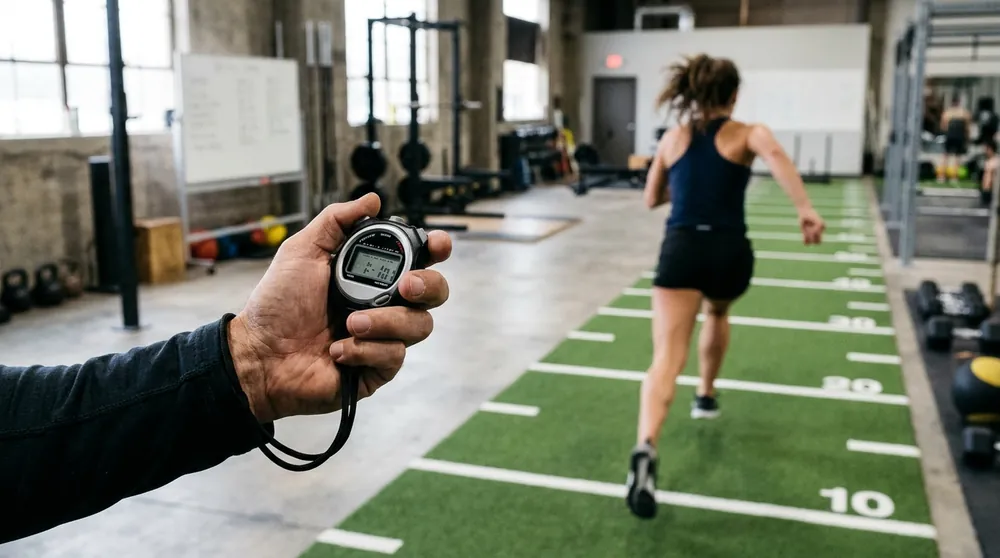
The movement screen looks at basic patterns such as squatting, lunging, hinging, balancing and reaching overhead. It shows the coach where an athlete is stiff, unbalanced or losing control, so exercises can be adjusted from day one.
Baseline tests measure where the team is starting. Depending on the sport, these can include measures of speed, jumping, strength and conditioning. The exact tests are chosen to match the demands of your sport.
The results do two jobs. They shape each athlete's training, and they set the numbers you will compare against in the final week.
Weeks 2 to 9: Building From Baseline to Peak
The middle of the program is where the work happens. Programs differ, but a 10-week block usually moves through a few broad phases.
Building the base. The early weeks focus on movement quality and general strength: squats, hinges, pushes, pulls, carries and core work, with enough volume to build work capacity. Athletes learn to lift with good form before the load climbs.

Getting more sport-specific. As the weeks go on, training looks more like the sport. A hockey team may spend more time on single-leg strength and short, hard efforts. A soccer team may add more repeated sprints and change of direction. Power work such as jumps and throws comes in once the strength base is there.
Progressive overload. Across the block, the load builds gradually: a little more weight, a few more reps, a faster pace or a shorter rest. That steady increase is what drives adaptation. It is also why a 10-week block works better than a few scattered sessions.
Easier and harder weeks. Not every session should be all-out. Sport for Life, the Canadian organization behind long-term athlete development, recommends varying intensity across sessions rather than training at high intensity all the time, especially for young athletes.
Week 10: Re-Test and Review
The program ends the way it started: with testing. Re-running the baseline tests shows each athlete, and the team as a whole, exactly how far they have come.
That review is useful beyond the numbers. It shows coaches which areas improved most, which athletes may need extra attention, and what to keep doing as the season approaches.
Training Young Athletes: Keep It Age-Appropriate
Many local teams are youth teams, and young athletes are not small professionals. Sport for Life warns against training young athletes like Olympians and recommends:
- simple periodization: a clear, age-appropriate plan, not an elite-level one
- varied intensity across sessions, to avoid burnout
- time for other sports in the off-season, which helps young athletes develop better all-round movement skills
The same guidance links constant high-intensity training to overuse injuries and to burnout that drives kids out of sport. A good off-season program for a youth team should leave athletes stronger and keen to play, not worn out.
How to Choose an Off-Season Program for Your Team
Before you book, ask:
- Does it start with testing? If there is no baseline, there is no way to show progress.
- Is it built for your sport? A program for a volleyball team should not look the same as one for a hockey team.
- Does the load build gradually? Look for a clear plan across the weeks, not the same hard workout every time.
- Can the coach scale for different levels? Every roster has a range of ages, sizes and training backgrounds.
- Is there support if someone gets hurt? Access to physiotherapy or chiropractic care helps an athlete get back on track quickly.
Anchor Team Training in Keswick
Anchor Team Training is a 10-week program for sports teams and groups, led by an Anchor coach. It includes:
- a movement screen and baseline testing for every athlete
- sport-specific programming built around your sport
- progressive overload across the 10 weeks
- post-training fitness testing to measure the results
Training takes place at our facility at 443 The Queensway South, Unit 70, in Keswick, an easy drive for teams from Sutton, Jackson's Point, Pefferlaw and across Georgina. If an athlete is carrying an injury, our physiotherapists and chiropractors are in the same building. Athletes who want more one-on-one work can add personal training, and our guide on returning to exercise after an injury covers getting back safely.
To set up a program, contact us with your sport, the number of athletes and the timing you have in mind, or call (905) 535-4449.
References
- Why Coaches Shouldn't Train Young Athletes Like Olympians, Sport for Life, October 2025
Ready When You Are
Book an assessment at our Keswick clinic
No referral needed. Most extended health benefit plans provide coverage, and we direct bill where possible.