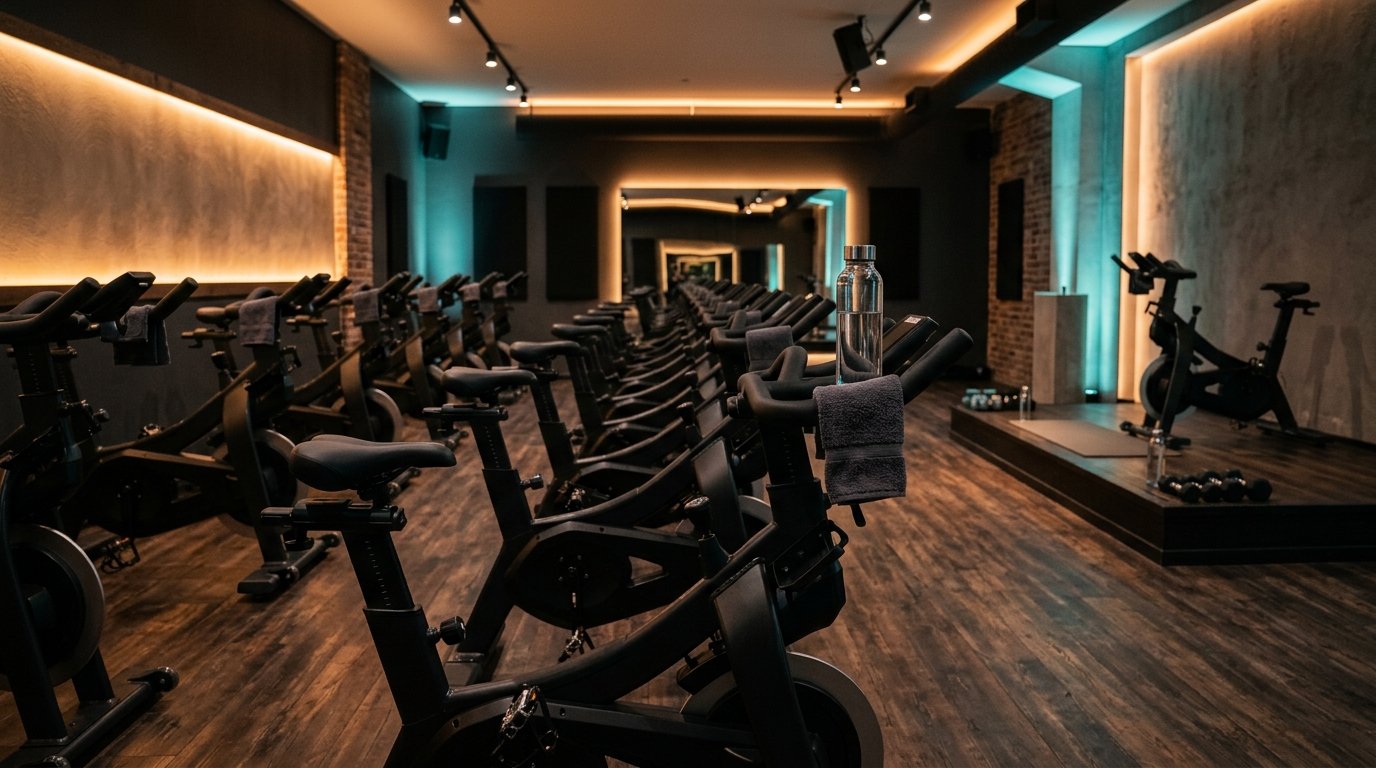
You are ready to return when the injured tissue can tolerate load, not when it stops hurting at rest. Rebuild in that order: restore full range of motion first, then rebuild strength under progressively heavier load, and reintroduce speed and impact last. Start at roughly half the volume you were doing before the injury and add about 10% a week. Sharp pain, pain that lingers more than 24 hours after a session, or swelling that returns all mean stop and get reassessed.
Key Takeaways
- Pain at rest is a poor readiness test. The useful question is whether the tissue tolerates load and recovers within 24 hours.
- Range of motion comes back first, strength second, speed and impact last. Reversing that order is the most common cause of re-injury.
- Return at about half your pre-injury volume and progress roughly 10% per week rather than picking up where you left off.
- Canada's guidelines give you the target to work back toward: 150 minutes of moderate-to-vigorous activity a week plus strength work twice weekly.
- Train the uninjured side too. Strength carries over, and it stops you building a new asymmetry while you heal.
In This Article
You are ready to train again when the injured tissue can tolerate load, not when it stops hurting while you sit still. That distinction is the whole thing, and it is why so many people feel fine for three weeks, walk back into the gym at their old numbers, and are back on the treatment table by the following Monday.
If you have finished rehab, or you are close to it, and you are staring at the gym door wondering whether you are allowed through it yet, this is the progression that gets you back in without undoing the work.
Pain-Free at Rest Is Not the Same as Ready
Most people use pain as the readiness test. It is the wrong test, because pain disappears long before capacity comes back.
A calf strain stops hurting when you are sitting on the couch well before that calf can absorb the force of a landing. A disc irritation settles at rest while the surrounding muscles are still guarding and underworked. In both cases the tissue has healed enough to be comfortable and nowhere near enough to be loaded.
The better test has three parts:
- Range. Can you move the joint through its full, normal range without a hard stop or a wince?
- Load. Can you put weight through it — bodyweight first, then external load — without sharp pain?
- Recovery. Are you the same or better the next morning, not worse?
Pass all three and you are ready to progress. Fail one and that is the thing to work on, rather than a reason to stop entirely.
Know What You Are Working Back Toward
"Take it easy" is useless advice because it has no endpoint. It helps to know the target.
Canada's national guidance is specific. The Canadian 24-Hour Movement Guidelines for Adults aged 18–64 recommend "at least 150 minutes per week" of moderate-to-vigorous aerobic physical activity, plus muscle strengthening activities "at least twice a week". They also ask adults to limit sedentary time to "8 hours or less" a day and to get "7 to 9 hours of good-quality sleep on a regular basis".
Those last two matter more during a return than most people expect. Sleep is when tissue repair actually happens, and long sedentary stretches stiffen exactly the areas you are trying to restore. You can do everything right for an hour in the gym and undo a good portion of it across the other twenty-three.
Treat 150 minutes and two strength sessions as the destination you are rebuilding toward over several weeks — not the week-one prescription.
Rebuild in the Right Order

Range first. Strength second. Speed and impact last. Almost every re-injury we see comes from someone reversing that order, usually by adding intensity before the tissue has capacity.
Phase one — restore range. Get the joint moving through its full arc before you load it. This is unglamorous, takes one to two weeks for most soft-tissue injuries, and is the phase people skip.
Phase two — rebuild capacity. Start at roughly half the volume you were handling before you got hurt, and add about 10% a week. Half feels insultingly easy, which is the point: it gives you room to progress for six weeks instead of maxing out in week two. Slow, controlled tempo work is your friend here, because it builds tissue tolerance without the peak forces that come with speed.
Phase three — reintroduce speed and impact. Running, jumping, change of direction and heavy lifting come last, once the tissue has demonstrated it can handle controlled load. This is the phase that returns you to sport or to your old programme, and it should be the shortest one.
The Mistakes That Send People Backwards
Four patterns account for most re-injuries:
Returning at pre-injury loads. Your last session before the injury is not your starting point after it. Strength drops measurably during even a few weeks off, and connective tissue adapts more slowly than muscle does — so the weight may feel manageable while the tendon is not ready for it.
Ignoring the other side. Training only the injured limb builds an asymmetry you will have to fix later. Loading the healthy side keeps overall strength up, and there is a well-documented carryover effect to the injured side even while it is resting.
Training through sharp pain. Dull, warming-up discomfort is usually fine. Sharp pain is information. Pushing through it is how a manageable four-week problem becomes a three-month one.
Treating the gym as the whole plan. Sleep, daily movement and sitting time all shape how quickly you recover between sessions. The guideline numbers above are not padding — they are the conditions that make your training work.
When to Stop and Get Reassessed
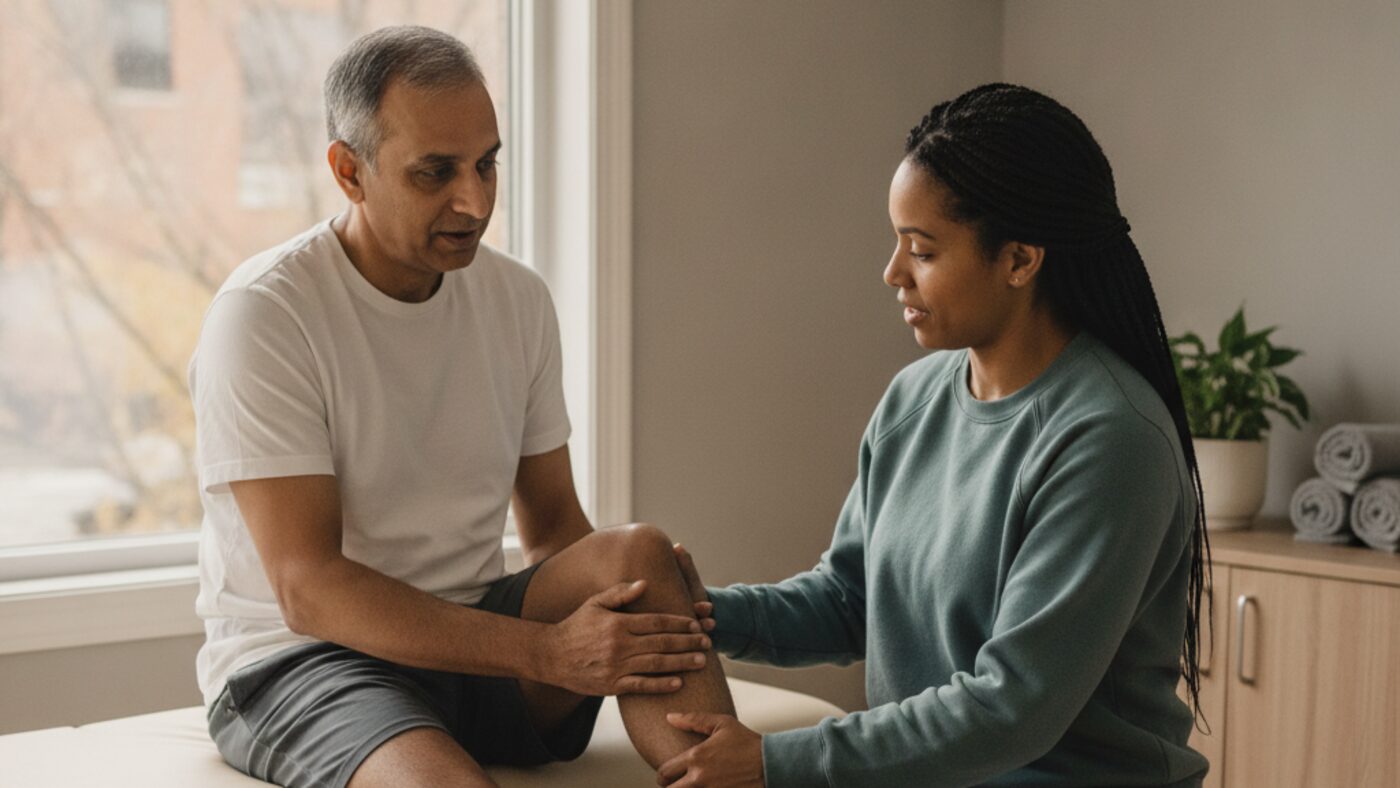
Book an assessment rather than pushing on if you notice any of these:
- Sharp or stabbing pain during a movement, as opposed to general muscular effort
- Pain that is still there more than 24 hours after a session
- Swelling that returns after activity
- A joint that gives way, catches or locks
- You have changed how you move to avoid the pain — a limp, a shrug, a twist
That last one is the sneakiest, because compensation feels like coping. It usually just relocates the problem to the next joint up the chain.
How This Works at Anchor
Most people in Georgina rehab in one place and train in another. You finish physiotherapy in Newmarket, you go back to your gym in Keswick, and nobody in either building has spoken to the other. The handoff — the part that actually determines whether you stay healthy — simply does not happen.
Our clinic and our gym are in the same building on The Queensway. The physiotherapist who clears you for loading can tell the trainer who writes your first six weeks back exactly what to avoid and what to push. If your injury was spinal or you want the joint assessed as well, our chiropractic team is down the same hall.
If you would rather have that progression written for you than guess at it, personal training is where most people returning from injury start — usually one to two sessions a week for the first month, then a handoff into regular training on the gym floor once the loading plan is established.
Come back deliberately and you get your training life back. Come back at your old numbers and you get another eight weeks off. The difference is almost always the first six weeks.
Ready When You Are
Book an assessment at our Keswick clinic
No referral needed. Most extended health benefit plans provide coverage, and we direct bill where possible.