
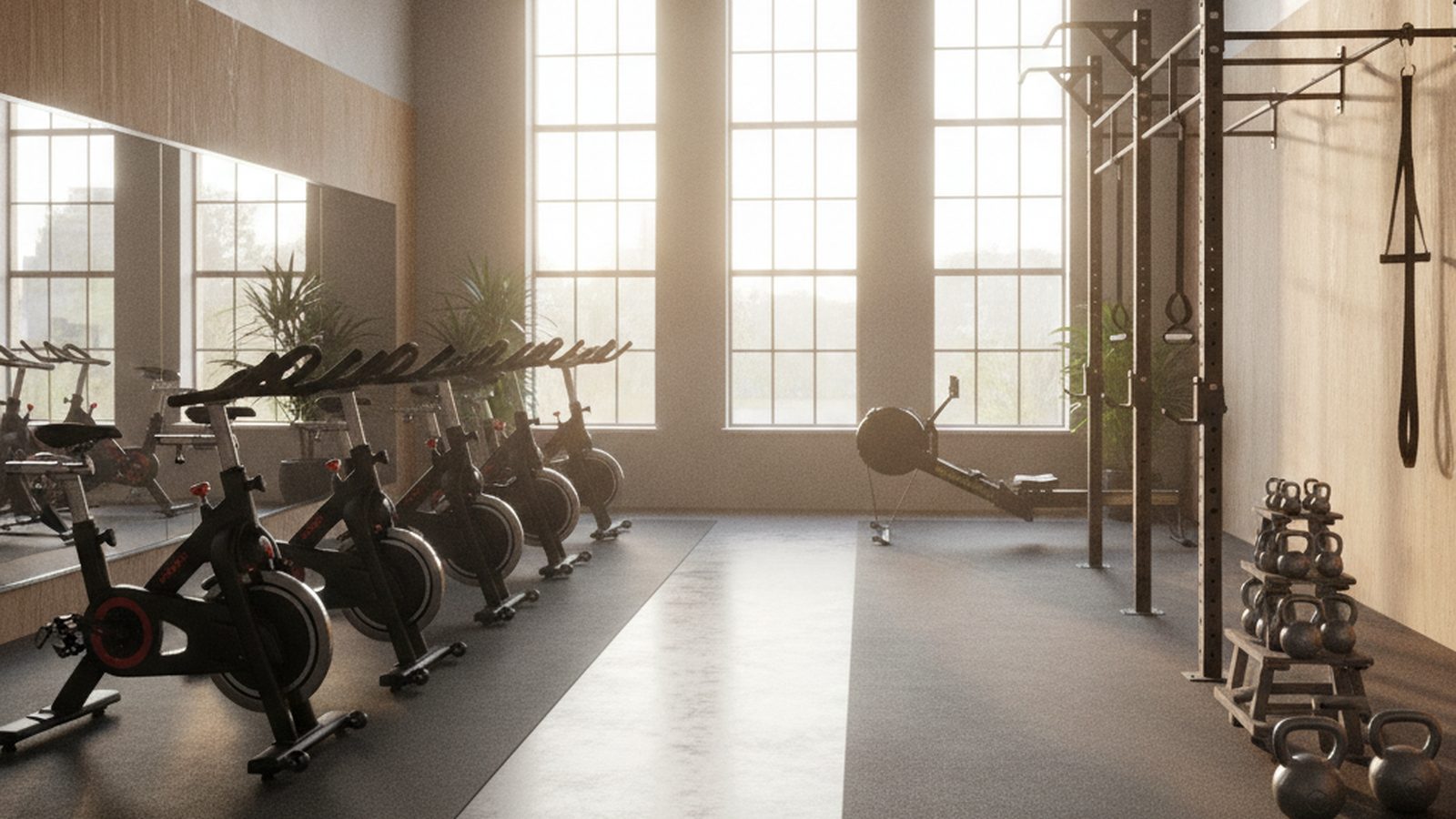
Choose indoor cycling if you want a low-impact cardio workout that builds endurance and is easy on your knees and back. Choose a HIIT class that includes strength work if you want to build muscle and fitness in the same session. Canada's movement guidelines call for both: at least 150 minutes of moderate to vigorous aerobic activity a week and muscle strengthening at least twice a week, so most people get the best results by combining them.
Key Takeaways
- Indoor cycling is mostly aerobic conditioning with very little impact on your joints.
- A strength-based HIIT class trains muscle and conditioning together in one session.
- Canada's 24-Hour Movement Guidelines recommend at least 150 minutes of moderate to vigorous aerobic activity a week plus muscle strengthening twice a week.
- Spin alone does not cover the strength part of the guidelines. A HIIT class with real resistance work does.
- For most people, two strength-based sessions and one or two rides a week covers both.
In This Article
Choose indoor cycling if you want low-impact cardio that builds endurance, and choose a strength-based HIIT class if you want to build muscle and fitness in the same session. Canada's movement guidelines call for both kinds of training every week, so for most people the best answer is a mix of the two.
Here is what each one actually trains, who it suits, and how to fit them together.
What Indoor Cycling Trains
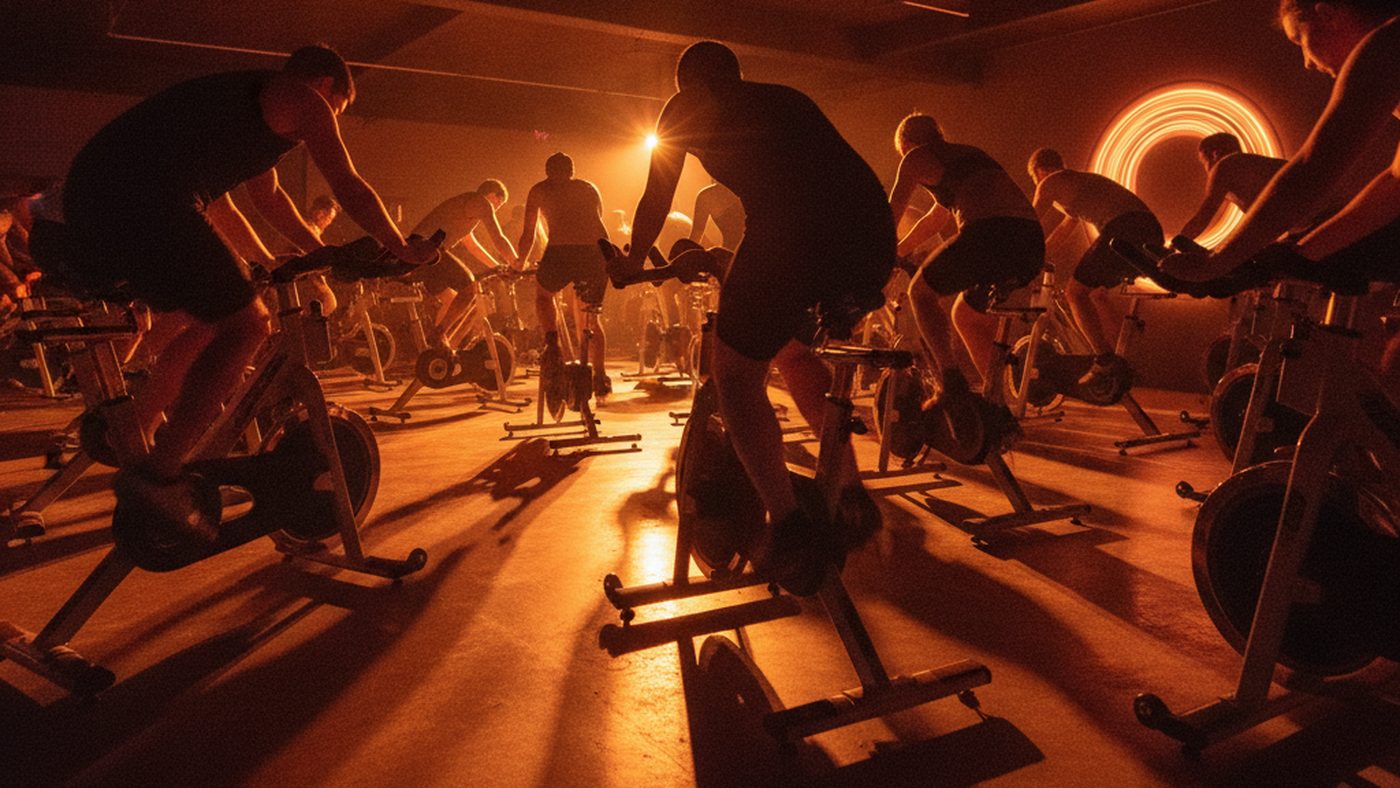
An indoor cycling class is a cardio workout on a stationary bike. Your instructor changes the resistance and cadence through the ride, so you move between steady efforts, climbs and faster sprints, usually to music.
What it does well:
- Builds your aerobic engine. Heart, lungs and leg endurance all improve with regular riding.
- Low impact. There is no pounding, which suits people who find running hard on their knees, hips or back.
- Easy to scale. Every rider controls their own resistance, so a beginner and a regular can share the same class.
What it does not do well is build strength through your upper body and trunk under real load. Spin is mostly legs and lungs.
What HIIT Trains
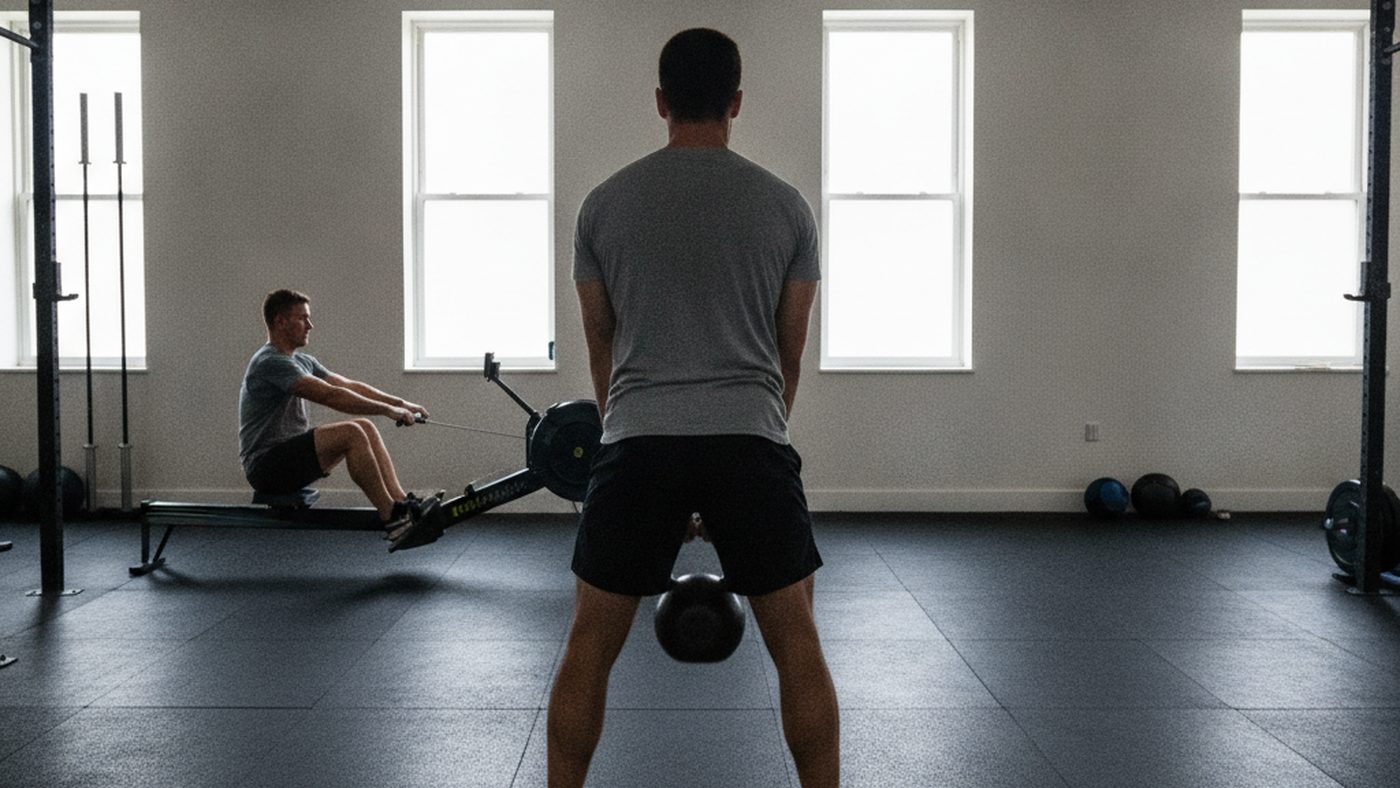
"HIIT" covers a lot of different classes. Some are mostly jumping cardio. Others, like AnchorHIIT, are structured strength and conditioning. AnchorHIIT runs as a 45-minute session in three zones: RIG for strength work with meaningful loads, ROW for cardiovascular training, and REPS for accessory work on your core, glutes and stabilizing muscles.
What it does well:
- Builds strength and muscle. Lifting with progressive overload is what drives strength gains.
- Conditions you at the same time. Short, hard intervals raise your heart rate between strength sets.
- Trains the whole body. Pushing, pulling, hinging and squatting all get covered across a week of classes.
The trade-off is that it is more technical. Good coaching and scaling matter, which is why small class sizes are worth looking for.
What Canada's Guidelines Recommend
The Canadian 24-Hour Movement Guidelines for adults aged 18 to 64 recommend "moderate to vigorous aerobic physical activities such that there is an accumulation of at least 150 minutes per week" and "muscle strengthening activities using major muscle groups at least twice a week."
That is the clearest way to compare the two. Indoor cycling is an efficient way to build up your aerobic minutes. It does not, on its own, tick the strength box. A HIIT class with genuine resistance training covers strength and adds aerobic minutes too.
Which One Suits Your Goal?
- "I want to get fitter and have more energy." Either works. Spin is the easier entry point if you are starting from very little.
- "I want to get stronger or change my shape." Choose strength-based HIIT. Muscle is built by lifting.
- "My joints don't like impact." Start with spin, and look for a HIIT class that scales jumps out.
- "I get bored easily." HIIT programming changes daily. Rhythm-based riding keeps things fun with music.
- "I want the best overall result." Combine them.
A Simple Week That Combines Both
For most adults, this covers the guidelines without burning out:
- Monday: strength-based HIIT
- Wednesday: indoor cycling
- Friday: strength-based HIIT
- Weekend: a second ride, or a walk around the lake
Keep at least one easier day between your two hardest sessions, and build up gradually if you are new. If you are coming back from an injury, our guide to returning to exercise after an injury covers how to progress safely.
Try Both at Anchor in Keswick
At Anchor Health & Fitness you can do both under one roof. Anchor Ride is our rhythm-based indoor cycling class, open to all levels, with instructors who guide you through every ride. AnchorHIIT is our small-group strength and conditioning class, with every exercise scaled to your level.
New members can start with our 3 classes for $39 intro offer, which includes both HIIT and spin, so you can find your mix before choosing a membership. See our fitness programs or get in touch. We are on The Queensway South in Keswick, close to Sutton, Jackson's Point and Pefferlaw.
References
- Canadian 24-Hour Movement Guidelines for Adults aged 18-64, Canadian Society for Exercise Physiology
Ready When You Are
Book an assessment at our Keswick clinic
No referral needed. Most extended health benefit plans provide coverage, and we direct bill where possible.