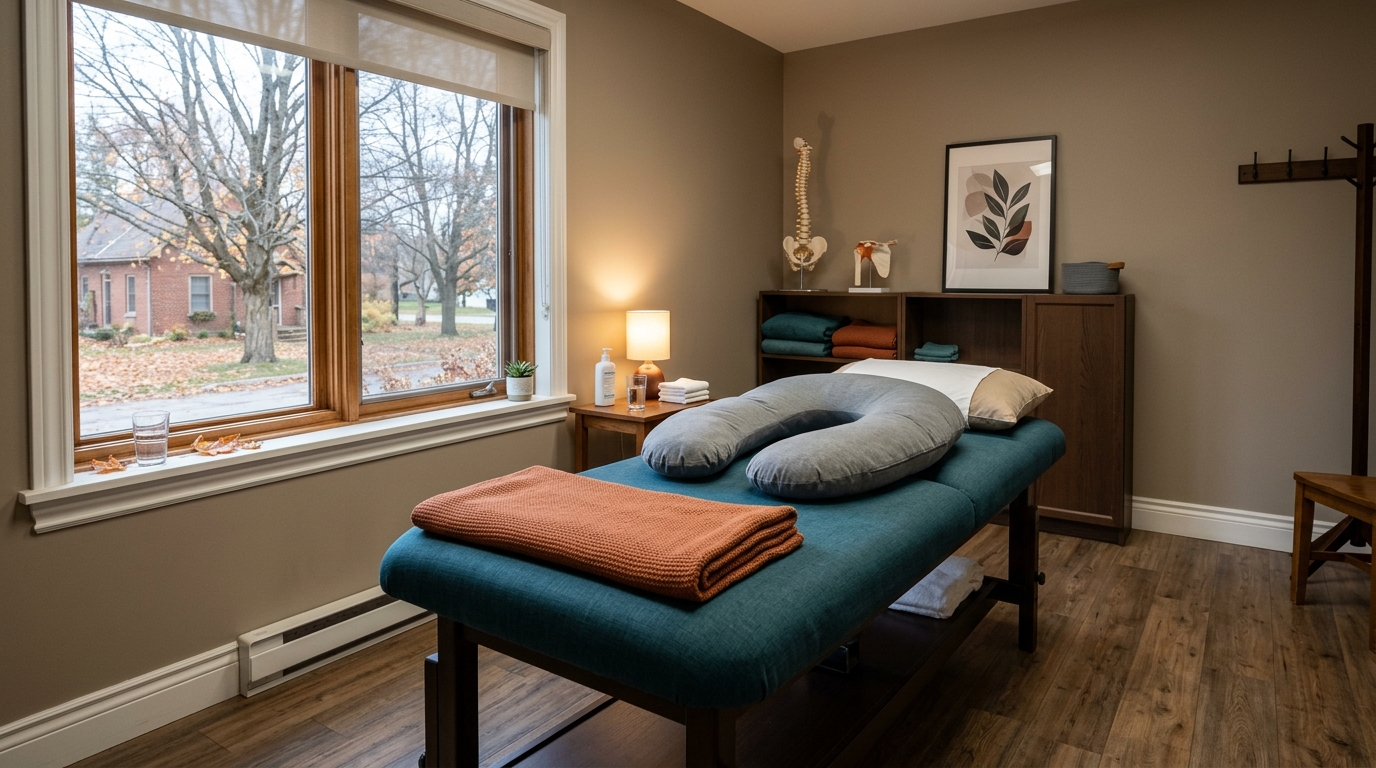
You can start pelvic floor physiotherapy at any point in pregnancy. Many people book in the second trimester to learn how to contract and fully relax the pelvic floor, or sooner if they have leaking, pelvic heaviness or pelvic and pubic pain. A prenatal assessment starts with a conversation about your pregnancy and symptoms, then a check of your posture, breathing, hips and pelvic floor, with an internal exam only if it would help and only with your consent. At Anchor in Keswick you can book our pelvic floor physiotherapist directly, with no referral.
Key Takeaways
- You can book pelvic floor physiotherapy in any trimester. Leaking, heaviness or pelvic pain are good reasons to book now rather than wait.
- Canada's pregnancy activity guideline says pelvic floor muscle training may be done daily to reduce the risk of urinary incontinence, and recommends instruction in proper technique.
- Learning to relax the pelvic floor matters as much as learning to squeeze it, especially as birth gets closer.
- A prenatal assessment is private and one-on-one. An internal exam is optional and only done with your consent.
- No referral is needed. Most extended health plans cover pelvic floor physio as physiotherapy.
- Bleeding, fluid leaking that may not be urine, contractions or reduced baby movement go to your midwife or doctor first.
In This Article
You can start pelvic floor physiotherapy at any point in pregnancy, and you do not need to wait for a problem. Many people book in the second trimester to learn how to tighten and fully relax their pelvic floor before birth, and anyone with leaking, pelvic heaviness or pelvic pain should book as soon as it starts to bother them.
At Anchor in Keswick, prenatal pelvic floor physiotherapy is one-on-one with our pelvic floor physiotherapist, Avishan Rafati, in a private treatment room. This guide covers when to book, what a first appointment involves and how it fits with the rest of your pregnancy care.
Why Pregnancy Puts Extra Load on the Pelvic Floor
Your pelvic floor is a group of muscles at the base of your pelvis. It supports your bladder, bowel and uterus, helps you stay dry when you cough or lift, and works with your breathing and deep abdominal muscles.
During pregnancy those muscles carry a growing baby, your posture shifts, and hormones make connective tissue more flexible. Constipation and a long day on your feet add more pressure. None of this means something is wrong, but it explains why leaking, heaviness and pelvic aches are so common, and why they are worth treating rather than putting up with.
Signs It Is Worth Booking Now
You do not need symptoms to book, but these are good reasons not to wait:
- leaking when you cough, sneeze, laugh, lift or exercise
- a sudden, hard-to-hold urge to pee
- a heavy, dragging or bulging feeling in the vagina, often worse later in the day
- pain at the front of the pelvis (the pubic bone), in the groin or around the tailbone, or pain turning over in bed or climbing stairs
- constipation or straining to empty your bowels
- a previous birth that left you with leaking, pain or a difficult recovery
- you want to keep training, at Anchor or elsewhere, and are unsure what to change
If you are early in pregnancy and feel fine, booking in the second trimester gives you time to learn the exercises properly and repeat them for months before birth.

What Happens at a Prenatal Pelvic Floor Assessment
A first appointment is mostly assessment. At Anchor it is private and one-on-one, and you can ask questions at every step.
Your history. Your physiotherapist asks how far along you are, how the pregnancy is going, any previous births, your bladder and bowel habits, pain, activity and what you want to be able to keep doing.
Movement and breathing. They look at your posture, breathing, hips and back, and how your abdominal muscles and pelvic floor work together when you breathe out, lift or change position.
The pelvic floor itself. An internal exam gives the clearest picture of how your pelvic floor contracts and, just as important, how well it relaxes. It is always your choice. Your physiotherapist explains why it may help and asks for your consent first, and you can decline or stop at any time. There are external ways to assess and train the muscles too.
A plan. You leave with exercises matched to what was found, practical changes for daily life (lifting, toileting, sleep positions) and a sense of when to come back.
Pelvic Floor Exercises: Doing Them Properly
Canada's physical activity guideline for pregnancy says pelvic floor muscle training, such as Kegel exercises, "may be performed on a daily basis" to reduce the risk of urinary incontinence, and that "instruction in proper technique is recommended to obtain optimal benefits."
That second part is where a physiotherapist helps. Common problems include squeezing the buttocks or holding the breath instead of lifting the pelvic floor, bearing down instead of lifting, and never fully letting go between squeezes.
Relaxing matters as much as squeezing. A pelvic floor that is always switched on can cause pain and make it harder to empty your bladder or bowels. As birth gets closer, your physiotherapist may spend more time on relaxing the pelvic floor, breathing and positions you can use in labour, alongside any strength work.
Staying Active Through Pregnancy
The same guideline recommends at least 150 minutes of moderate-intensity physical activity each week during pregnancy, unless you have been told otherwise. Many people in Keswick and Georgina want to keep going to classes or lifting, and pelvic floor physio can help you adjust: which moves to scale back, how to breathe through effort, and which symptoms (leaking, heaviness, pain) mean it is time to change the exercise.

Because Anchor is a clinic and fitness studio under one roof, your physiotherapy plan and your training can line up. After birth, our GROWCO postnatal rehab program picks up where prenatal care leaves off.
When to Call Your Midwife or Doctor First
Pelvic floor physiotherapy is not urgent care. Contact your midwife or doctor, or go to hospital, for:
- vaginal bleeding
- fluid leaking that may not be urine
- regular contractions or tightenings before 37 weeks
- your baby moving less than usual
- severe or sudden pain, fever, or pain when you pee
If you are unsure, you can also call Health811 for advice from a registered nurse.
After Your Baby Arrives
Many people come back after birth, often around six weeks, though timing depends on your birth and recovery. Our guide to pelvic floor physiotherapy explains postpartum care, and if you have leaking after birth, our post on stress incontinence and pelvic floor physiotherapy goes into it in more detail.
Cost and Coverage
You do not need a referral to book. Pelvic floor physiotherapy is claimed as physiotherapy under most extended health plans, and OHIP covers it only for some people at government-funded clinics. Our post on whether pelvic floor physiotherapy is covered by OHIP explains who qualifies and what to check in your plan. Anchor offers direct billing where possible.
Book Prenatal Pelvic Floor Physio in Keswick
Book online with Avishan through our pelvic floor physiotherapy page, or call (905) 535-4449. We are at 443 The Queensway South, Unit 70, in Keswick, and see clients from Georgina, Sutton, Jackson's Point and Pefferlaw. If you are also dealing with back or hip pain, our post on seeing a chiropractor during pregnancy explains how our chiropractors adapt care for each trimester.
References
- 2019 Canadian Guideline for Physical Activity throughout Pregnancy, Canadian 24-Hour Movement Guidelines (CSEP)
Ready When You Are
Book an assessment at our Keswick clinic
No referral needed. Most extended health benefit plans provide coverage, and we direct bill where possible.