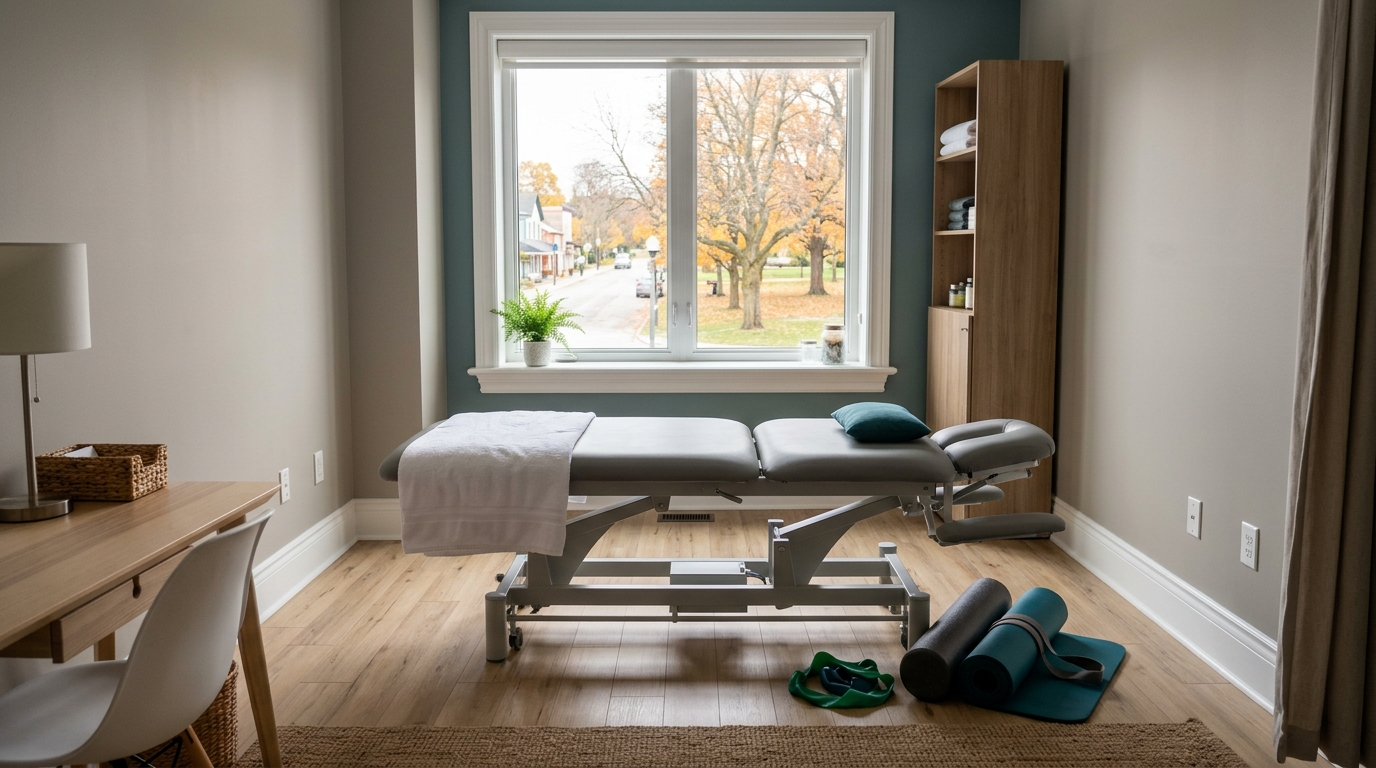
Book a Registered Massage Therapist if your back feels tight, stiff or sore from tension, long hours sitting or a hard week of training, and you mainly want hands-on relief. Book a physiotherapist if the pain started with an injury, keeps coming back, limits what you can do, or you want a diagnosis and an exercise plan. Many people do best with both: guidance from the UK's NICE says manual therapy such as massage is worth considering for low back pain as part of a package that includes exercise.
Key Takeaways
- Massage therapy is hands-on soft tissue treatment, aimed mostly at muscle tension and comfort.
- Physiotherapy starts with an assessment and builds an exercise-based plan, with hands-on care where useful.
- Tight, achy, tension-type back pain often suits massage first; injury, recurring pain or lost function suits physio first.
- NICE guidance supports manual therapy for low back pain only alongside exercise, which is why the two often work best together.
- Neither needs a referral in Ontario, and most extended health plans cover both.
- Numbness in the saddle area, bladder or bowel changes or a leg getting weaker need urgent medical care, not a booking.
In This Article
If your back feels tight, stiff or sore from tension, start with a Registered Massage Therapist. If the pain followed an injury, keeps coming back or stops you doing normal things, start with a physiotherapist, and plan on using both if the pain has hung around for a while.
Both are under one roof at Anchor in Keswick, so here is how to choose who to book first.
What Massage Therapy Does for Back Pain
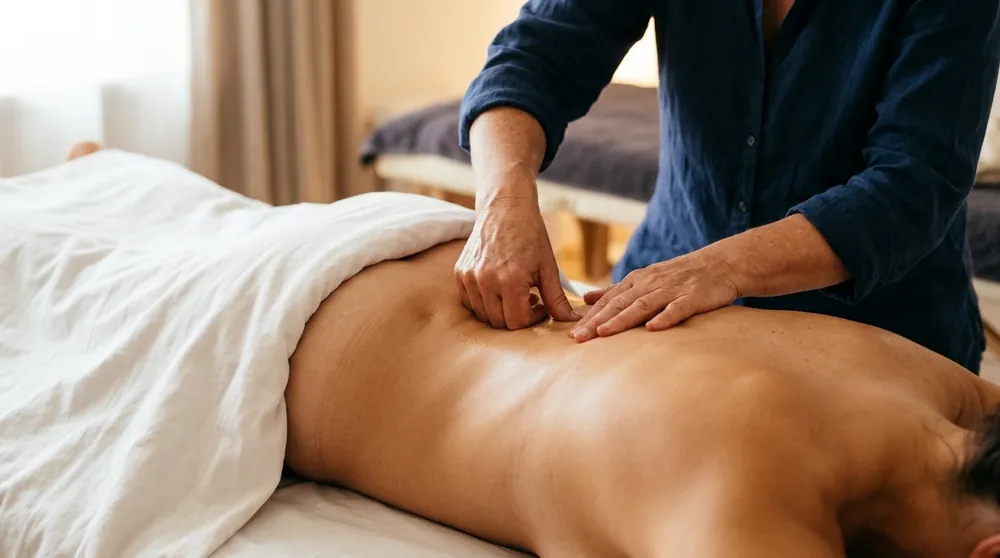
A Registered Massage Therapist (RMT) treats the soft tissues: muscles, tendons and the connective tissue around them. For back pain, a session usually focuses on the muscles along the spine, the hips and glutes, and the shoulders and neck, which often tighten up together.
Massage tends to suit back pain that:
- feels like tightness, knots or a constant ache
- builds up from sitting, driving, desk work or lifting kids
- flares after a hard week of training or yard work
- comes with stress and poor sleep
Your RMT will ask about your health history and check what hurts before starting, and you control the pressure. If you have never had one, our guide to your first massage therapy appointment explains the visit.
What Physiotherapy Does for Back Pain
A physiotherapist starts with an assessment: how the pain started, what makes it better or worse, how you move, and tests of strength, flexibility and nerve function. Then they explain what they think is going on and build a plan.
That plan is mostly about movement. Expect specific exercises to do at home, advice on what to keep doing and what to ease off, and hands-on treatment where it helps. Physiotherapy at Anchor combines hands-on therapy with a movement program built for you.
Physiotherapy tends to suit back pain that:
- started with a fall, a lift, a twist or a sports injury
- keeps coming back every few months
- stops you from working, sleeping, training or lifting your kids
- travels into the buttock or down the leg
- has not settled after a few weeks

What the Guidance Says
The UK's National Institute for Health and Care Excellence (NICE) publishes one of the most widely used guidelines on low back pain. It recommends considering manual therapy, which it defines as spinal manipulation, mobilisation or soft tissue techniques such as massage, for managing low back pain, but only as part of a treatment package that includes exercise (NICE NG59).
In practice, that means hands-on care is useful, but it works best alongside a plan that gets you moving. Our article on what actually helps low back pain covers the rest of that picture.
A Quick Way to Decide
| Your back pain | Start with |
|---|---|
| Tight, stiff and achy, no injury | Massage therapy |
| Sore after sitting, driving or desk work | Massage therapy |
| Started with a specific injury or lift | Physiotherapy |
| Keeps coming back | Physiotherapy |
| Limits work, sleep or exercise | Physiotherapy |
| Runs into the buttock or leg | Physiotherapy |
| You want relief now and a long-term plan | Both |
Still not sure? Call the clinic and describe the pain. Our front desk can suggest where to start, and it is easy to switch, because our physiotherapists, massage therapists and chiropractors all work under one roof at Anchor. If you are also weighing up a chiropractor, our guide to chiropractor or physiotherapist compares those two.
Using Both Together
For back pain that has lasted more than a few weeks, combining the two often makes sense. A common pattern at Anchor looks like this:
- A physiotherapy assessment to find out what is driving the pain and set your exercises.
- Massage therapy between physio visits to ease muscle guarding, so the exercises feel more comfortable.
- Fewer appointments over time as the exercises take over and the pain settles.
What Each First Visit Looks Like
A first massage therapy visit starts with a health history form and a short conversation about where it hurts and what makes it worse. Your RMT explains the plan and asks for your consent, then you undress to your comfort level and lie on the table under a sheet. Treatment follows in the same visit, and you can ask for more or less pressure at any point. Expect some tenderness for a day afterwards.
A first physiotherapy visit is a full-body assessment. Wear shorts or leggings and a T-shirt, because your physiotherapist will watch you bend, twist, squat and walk. By the end you should know what they think is driving the pain, which exercises to start at home, and how often to come back. Hands-on treatment may be part of the first visit too.
Bring your benefits card to either appointment, and a list of any medications.
When to See a Doctor First
Most back pain is not serious. Seek urgent medical care, rather than booking a treatment, if you have:
- numbness around the groin, buttocks or inner thighs
- new trouble controlling your bladder or bowels
- a leg that is getting weaker
- fever with back pain, or unexplained weight loss
- severe back pain after a fall or accident
Your RMT or physiotherapist will also ask about these before treatment.
Coverage and Booking in Ontario
You do not need a referral for massage therapy or physiotherapy in Ontario. OHIP does not cover massage therapy, and it covers physiotherapy only for certain groups at government-funded clinics. Most people claim both through extended health benefits. Plans differ, so check your annual maximum for each. Our guide to massage therapy insurance in Ontario lists what to ask your provider. Anchor offers direct billing where possible.
Book in Keswick
Ready to book? See registered massage therapy at Anchor or physiotherapy in Keswick to book online, or call (905) 535-4449. We are at 443 The Queensway South, Unit 70, serving Keswick, Georgina, Sutton and Jackson's Point.
References
- Low back pain and sciatica in over 16s: assessment and management (NG59), Recommendations, National Institute for Health and Care Excellence (UK)
Ready When You Are
Book an assessment at our Keswick clinic
No referral needed. Most extended health benefit plans provide coverage, and we direct bill where possible.