

Massage therapy is not covered by OHIP, but it is one of the most commonly covered paramedical services in Ontario extended health benefit plans. Roughly 85% of employer-sponsored plans include Registered Massage Therapy, typically with an annual maximum of $300 to $1,000 or 80 to 100 percent coverage per visit. The therapist must be registered with the College of Massage Therapists of Ontario (CMTO), and most plans no longer require a doctor's referral. At Anchor Health & Fitness in Keswick, every massage is provided by a CMTO-registered RMT, includes a complete insurance receipt, and direct billing is offered where possible.
Key Takeaways
- Massage therapy is not covered by OHIP. Coverage comes from extended health benefit plans, Health Spending Accounts, WSIB claims or motor vehicle accident benefits.
- Approximately 85% of Canadian employer-sponsored benefit plans include Registered Massage Therapy, most commonly with annual maximums between $300 and $1,000.
- Only treatment from a CMTO-registered Massage Therapist qualifies. Spa massage and unregistered practitioners are never eligible for reimbursement.
- Most Ontario plans no longer require a doctor's referral, but a small number still do. Check your benefits booklet before your first visit.
- A valid insurance receipt must show the RMT's name, CMTO registration number, date, treatment length and amount charged. Anchor provides this automatically after every session.
- Unused benefits do not roll over. If your plan resets January 1, sessions booked in November and December use coverage you would otherwise lose.
In This Article
Cost is the number one reason people delay booking massage therapy. They assume it is an out-of-pocket luxury, so they live with the back pain, the headaches and the tension instead of getting treatment.
In most cases, that assumption is wrong. If you have extended health benefits through your employer, your spouse's employer or a private plan, there is a strong chance your massage is already paid for. Here is exactly how coverage works in Ontario, and how to check your plan in under five minutes.
Is Massage Therapy Covered by OHIP?
No. OHIP does not cover massage therapy, regardless of where it is provided or who provides it.
Coverage for massage therapy in Ontario comes from four sources:
- Extended health benefit plans: Employer-sponsored or private insurance plans that include paramedical services. This is where the vast majority of coverage comes from.
- Health Spending Accounts (HSAs): Employer-funded accounts that let you direct a fixed dollar amount toward eligible health services, including Registered Massage Therapy.
- WSIB claims: Massage therapy approved as part of a workplace injury recovery plan.
- Motor vehicle accident benefits: Massage therapy included in a treatment plan approved by an auto insurer after a collision.
For most people in Keswick and Georgina, the first category is the one that matters. If you have benefits through work, massage therapy is one of the most commonly covered paramedical services in the country.
How Much Does the Average Plan Cover?
Approximately 85% of Canadian employer-sponsored health benefit plans include coverage for Registered Massage Therapy. What that coverage looks like varies by plan, but it almost always follows one of three structures.
| Coverage structure | How it works | Common range |
|---|---|---|
| Annual dollar maximum | Your plan reimburses sessions up to a yearly cap | $300 to $1,000 per year |
| Percentage per visit | Your plan pays a set percentage of each session until the annual cap is reached | 80% to 100% |
| Per-visit maximum | Your plan pays a fixed amount per appointment | $75 to $100 per visit |
Here is what that means in practice. If your plan covers $500 per year and a 60-minute session costs $120, you get roughly four fully covered massages every year. If your plan reimburses 80% with a $1,000 maximum, you are paying about $24 per session out of pocket.
Two details are worth checking in your benefits booklet. First, whether your plan year resets on January 1 or on your enrollment date, because unused benefits do not carry over. Second, whether your plan pools massage with other paramedical services under one combined maximum or gives massage its own separate allowance.

The One Requirement That Matters: Your Therapist Must Be an RMT
Insurance companies do not cover massage. They cover Registered Massage Therapy.
That distinction decides whether your claim is approved or denied. Your therapist must hold active registration with the College of Massage Therapists of Ontario, the regulatory body that licenses the profession. A CMTO-registered RMT has completed a minimum 2,200-hour accredited education program, passed written and practical certification exams, carries professional liability insurance and follows the College's standards of practice.
Spa massage, relaxation bodywork and treatment from unregistered practitioners are never eligible for reimbursement, no matter how skilled the practitioner is. When you submit a claim, your insurer verifies the registration number on the receipt against the CMTO public register. If the number is not there, the claim is denied.
Every massage at Anchor Health & Fitness is provided by a CMTO-registered RMT, which means every session qualifies under any plan that includes massage therapy. You can meet the team and choose the therapist whose specialty fits your needs on our Registered Massage Therapy page.
Do You Need a Doctor's Referral?
For most Ontario plans, no. The majority of insurers dropped the referral requirement for massage therapy years ago, which is part of what makes RMT coverage so accessible.
A small number of plans still require a physician's note before they will reimburse paramedical services. If yours is one of them, a quick visit to your family doctor or a walk-in clinic satisfies the requirement, and the note usually stays valid for the rest of the benefit year.
The only reliable way to know is to check your own plan. Log in to your insurer's portal or call the number on the back of your benefits card and ask three questions:
- Is Registered Massage Therapy covered under my plan?
- What is my annual maximum, and is there a per-visit cap?
- Do I need a doctor's referral?
That call takes less than five minutes and removes every unknown before you book.
Direct Billing vs. Paying and Submitting a Receipt
There are two ways to use your coverage, and the difference matters for your wallet.
Direct billing means the clinic submits the claim to your insurer on your behalf at the time of your appointment. You pay only the portion your plan does not cover, if anything. There is no large upfront bill and no waiting two to four weeks for reimbursement. Most major Canadian insurers, including Sun Life, Manulife, Canada Life, Green Shield, Blue Cross and Desjardins, support direct billing for RMT services.
Receipt reimbursement means you pay the full session cost, then submit your receipt through your insurer's app or website. Reimbursement typically arrives by direct deposit within three to five business days.
Anchor offers direct billing where possible. When direct billing is not available for a specific plan, you still leave with a complete, CMTO-compliant receipt that takes under two minutes to submit online.

What a Valid RMT Receipt Looks Like
If you submit your own claims, the receipt is the document your insurer judges. According to the CMTO, a valid massage therapy receipt must include:
- The date of the appointment
- Your full name as it appears on the benefits plan
- The RMT's name and CMTO registration number
- The amount charged
- The RMT's signature
- An HST number, where applicable
The service should be listed as massage therapy treatment. If any of these details are missing, your insurer can delay or deny the claim, so check the receipt before you upload it. At Anchor, a complete receipt is issued automatically after every session, with nothing extra to request.
Keep every receipt even after you hit your annual maximum. Massage therapy from a registered practitioner is an eligible medical expense under the federal Medical Expense Tax Credit, so unused receipts can still reduce your tax bill at filing time.
How to Get the Most Out of Your Benefits
A few habits separate people who use their coverage from people who lose it.
Book before your plan resets. Most plans renew January 1, and unused massage benefits disappear. November and December are the worst months to leave coverage on the table.
Coordinate spousal benefits. If both you and your spouse have plans, you can submit the remainder of a claim to the second plan after the first is exhausted. In many cases that reduces your out-of-pocket cost to zero.
Spread sessions across the year. A $1,000 benefit at $120 per session is roughly eight covered visits, or one massage every six to seven weeks. Booking at that rhythm keeps pain and tension managed instead of letting it build.
Use it as part of a plan, not a one-off. Massage therapy works best when it is coordinated with the rest of your care. At Anchor, your RMT works in the same building as our chiropractic and physiotherapy teams, so a claim-covered massage can be one part of a complete treatment plan rather than isolated relief. If you are dealing with swelling or recovering from surgery, lymphatic drainage is covered too. At Anchor, facial lymphatic drainage is performed by our RMT and uses your massage therapy benefit, while body lymphatic drainage is performed by our chiropractors and uses your chiropractic benefit.
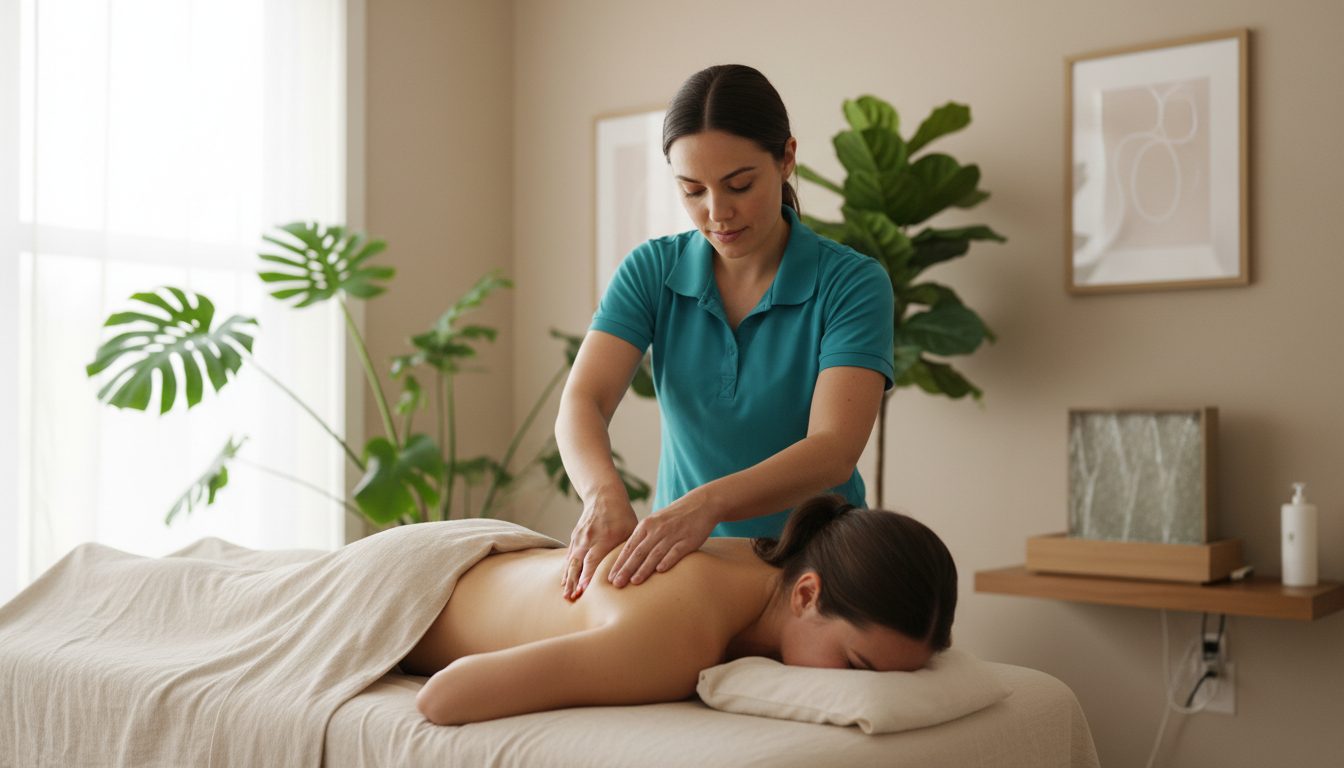
Book With Confidence
You do not need a referral for most plans, you do not need to pay the full cost upfront when direct billing applies, and you do not need to guess whether your therapist qualifies. Every massage at Anchor is provided by a CMTO-registered RMT and comes with a complete insurance receipt.
Check your benefits portal tonight, find your annual maximum, and put it to work. Book your massage therapy appointment at our Keswick clinic, or call us at (905) 535-4449 and we will help you confirm your coverage before your first visit.
Ready When You Are
Book an assessment at our Keswick clinic
No referral needed. Most extended health benefit plans provide coverage, and we direct bill where possible.