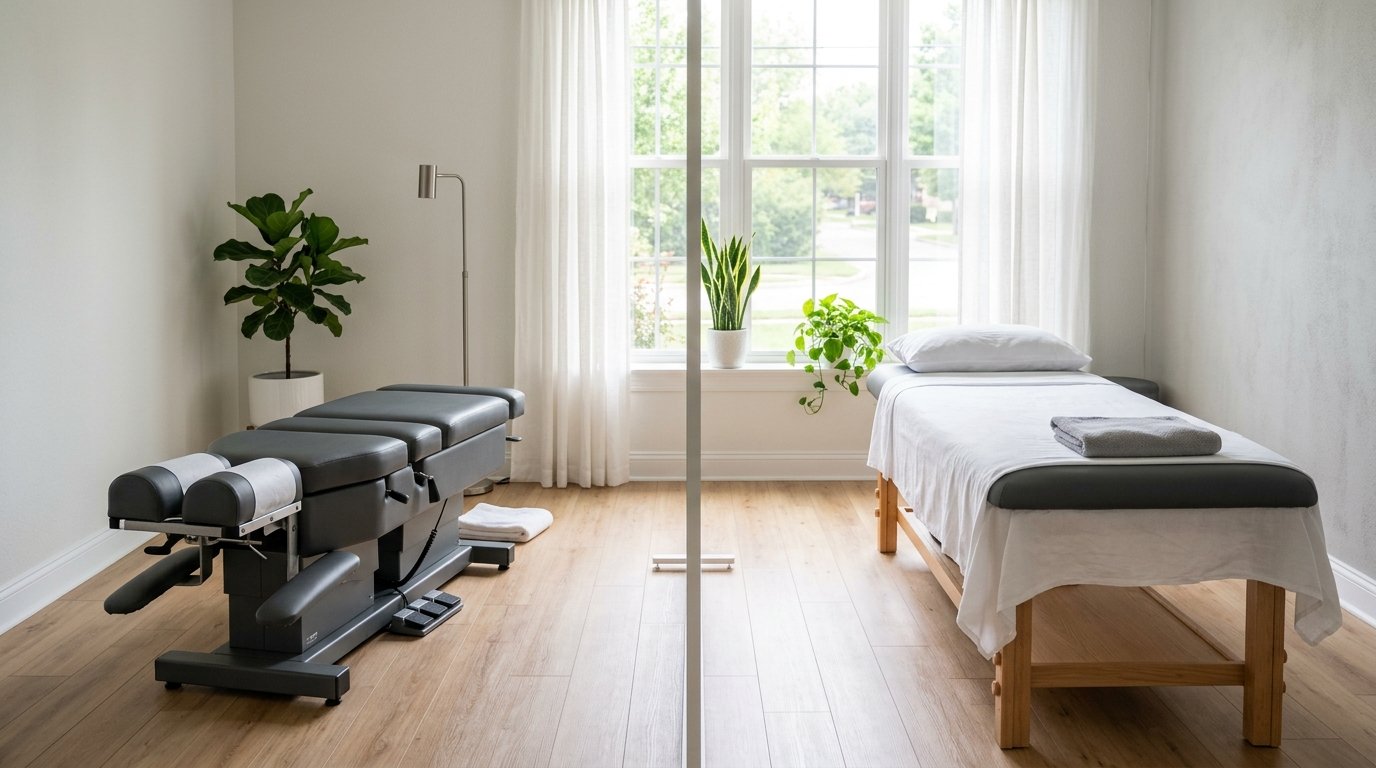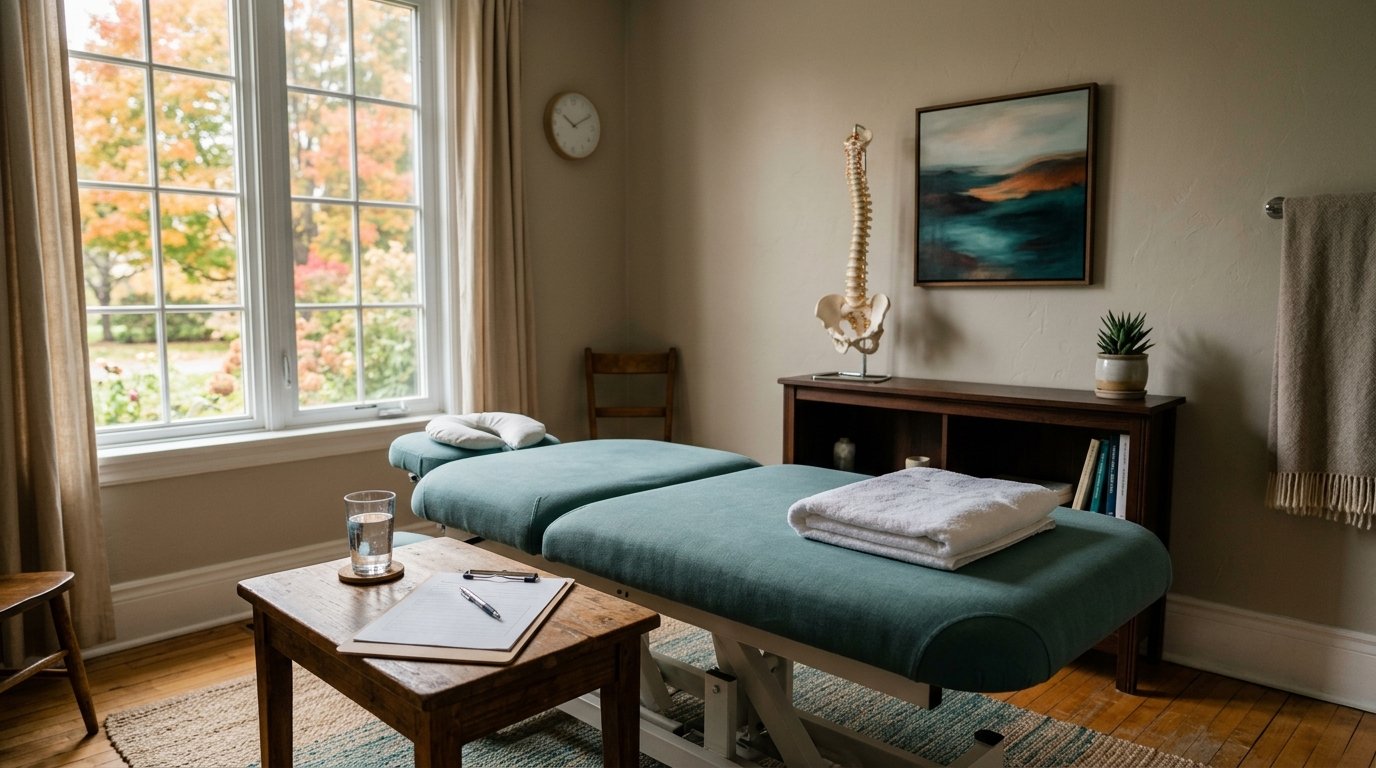
A first osteopathy appointment starts with questions about your pain, your health and your daily routine, then a hands-on assessment of how you move. Treatment usually follows in the same visit, using gentle techniques such as soft tissue work, joint mobilization and stretching. Wear comfortable clothes, bring a list of medications and your benefits details, and expect to feel a little sore for a day or two afterwards. You do not need a referral.
Key Takeaways
- The first visit is longer on questions and assessment than later visits.
- Treatment is hands-on and gentle: soft tissue work, mobilization, stretching and movement advice.
- Wear loose, comfortable clothing, and bring your medication list and benefits details.
- Mild soreness for 24 to 48 hours after treatment is common.
- No referral is needed. Osteopathy is not covered by OHIP, but many extended health plans include it.
- At Anchor, osteopathy is provided by Riandre Flores, an Osteopathic Manual Practitioner (M.OMSc).
In This Article
Your first osteopathy appointment starts with a conversation about your pain, your health and your daily routine, followed by a hands-on assessment of how you move and gentle treatment, usually in the same visit. Wear comfortable clothes, bring your medication list and benefits details, and plan for a quiet evening afterwards in case you feel a little sore.
This guide walks through the visit step by step, so you know what to expect when you come to Anchor in Keswick.
What People Book Osteopathy For
People come to osteopathy at Anchor for a range of muscle and joint problems. The most common include:
- back, neck and joint pain, including stiffness that builds up over a work week
- headaches linked to neck and shoulder tension
- sports strains and recovery after an injury
- pregnancy and postpartum aches, as the body changes and then recovers
- tension from stress, long drives or long hours at a desk
If you are not sure osteopathy is the right fit for your problem, mention it when you book or call. Osteopathy, chiropractic, physiotherapy and massage therapy all work under one roof at Anchor, so it is easy to move to a different kind of care if that suits you better.
Before Your Appointment
A little preparation makes the first visit more useful.
Book the right appointment. At Anchor you can book osteopathy online with Riandre Flores or by calling (905) 535-4449. No referral is needed.
Check your benefits. Osteopathy is not covered by OHIP. Many extended health plans include it, but plans differ: some only reimburse practitioners from certain associations, and some want a doctor's note first. Our guide to osteopathy insurance coverage in Ontario lists the questions to ask your provider.
Write down a few notes. It helps to have:
- when the problem started and anything that set it off
- what makes it better or worse, and the time of day it is at its worst
- past injuries, surgeries or accidents, even old ones
- your current medications and any health conditions
- any imaging or reports you already have
Dress for movement. Loose shorts or leggings and a T-shirt work well.
Step 1: Your Health History
The first part of the appointment is talking. Your practitioner will ask about the problem that brought you in, your general health, your work and activity, your sleep, and any other care or medication you are using. The UK's General Osteopathic Council describes this case history as a standard part of a first visit.
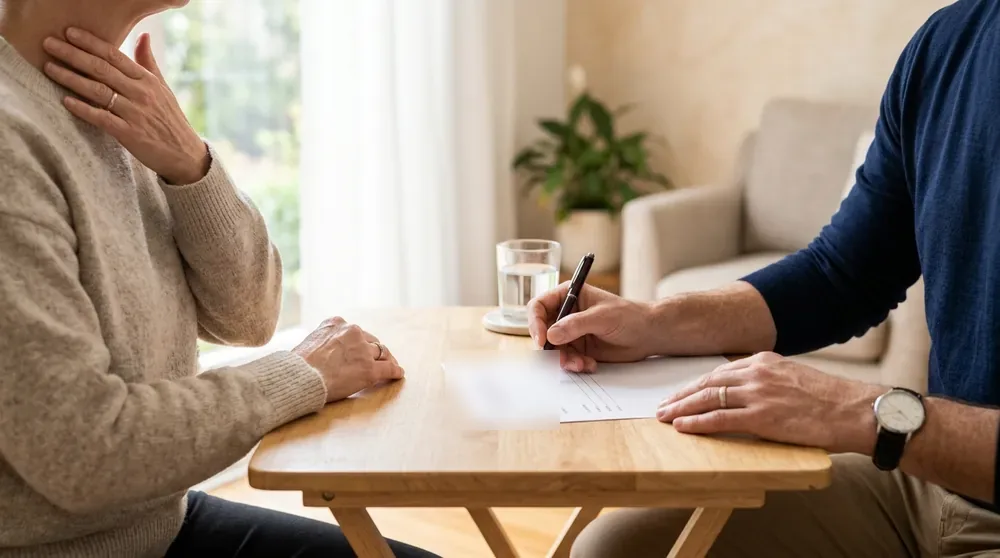
This is also the moment to ask questions. If something in your history points to a problem that needs a doctor first, your practitioner will tell you.
Step 2: The Hands-On Assessment
Next comes a physical assessment. Expect your practitioner to:
- watch how you stand, sit, bend and turn
- check how individual joints move, from your neck to your feet
- feel the muscles, joints and other soft tissues around the painful area and beyond it
- test strength, flexibility and sometimes reflexes
Osteopathy looks at how the whole body moves together, so a sore shoulder may lead to questions about your upper back or ribs, and a sore knee to checks on your hips and feet. You may be asked to adjust clothing so the practitioner can see or feel an area. You will always be given privacy and a towel, and you can ask to stop or change position at any point. You are also welcome to bring a friend or relative with you.
Step 3: Treatment
Once your practitioner has explained what they found, treatment usually begins in the same visit if you agree to it. Osteopathic manual treatment uses gentle, hands-on techniques, such as:
- soft tissue work to ease tight muscles
- joint mobilization, moving a joint slowly through its range
- stretching of muscles and connective tissue
- gentle positional techniques where the body is supported in a comfortable position while tension eases
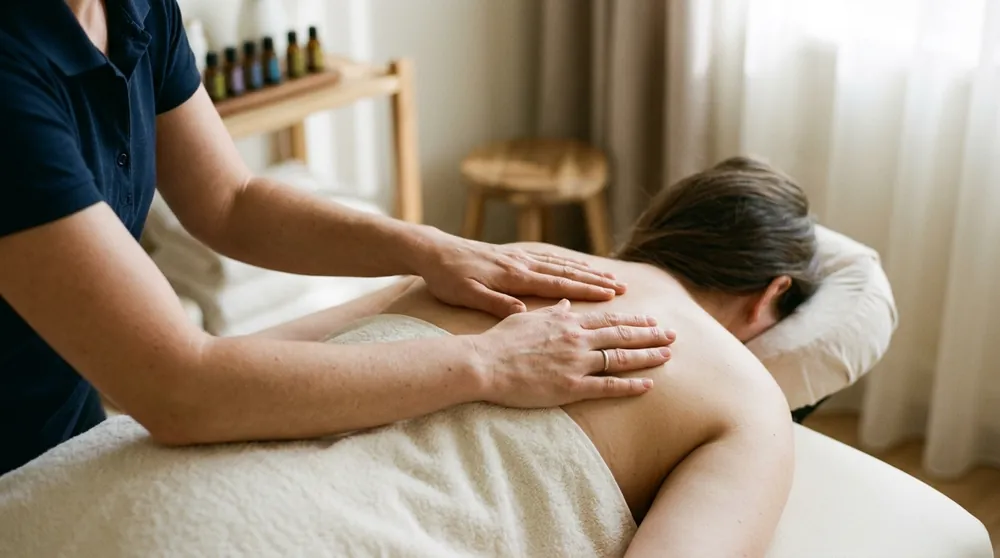
Most people find treatment relaxing. Some techniques can feel firm on a tight area. Tell your practitioner if anything is uncomfortable and they will adjust.
Step 4: Your Plan and Home Advice
At the end of the visit you should leave knowing:
- what your practitioner thinks is driving the problem
- what they suggest next and roughly how often
- a few simple stretches, movements or posture changes to try at home
You decide how many follow-up visits to book. Follow-ups are usually shorter and focus more on treatment than on questions.
How You May Feel Afterwards
Feeling a little sore or tired for 24 to 48 hours after treatment is common, according to the UK's General Osteopathic Council. Drink water, keep moving gently, and avoid a hard workout that evening if you can.
Call your practitioner if soreness lasts longer than a couple of days or feels different from your usual pain. Seek medical care right away for new numbness, weakness, loss of bladder or bowel control, or severe pain that does not settle.
Who Provides Osteopathy at Anchor
Osteopathy at Anchor is provided by Riandre Flores, an Osteopathic Manual Practitioner. She holds a Master in Practice of Osteopathic Manipulative Sciences (M.OMSc) from the Canadian Academy of Osteopathy, completed over 1,000 hours of supervised clinical training, and brings a background in physiotherapy from Brazil.
One thing worth knowing: in Ontario, manual osteopathy is not a regulated health profession, as the Ontario Association of Osteopathic Manual Practitioners explains. That is why benefits plans often ask which association a practitioner belongs to. If you are deciding between treatments, our guides on what an osteopath does and osteopath vs chiropractor explain the differences.
Book Your First Visit in Keswick
Ready to book? See osteopathy at Anchor in Keswick to book online with Riandre, or call (905) 535-4449. We are at 443 The Queensway South, Unit 70, close to Sutton, Jackson's Point and Pefferlaw, and we offer direct billing where possible. Our chiropractors, physiotherapists and massage therapists work under the same roof if you need more than one kind of care.
References
- What to expect at your appointment, General Osteopathic Council (UK)
- Osteopathy Regulation in Ontario, Ontario Association of Osteopathic Manual Practitioners
Ready When You Are
Book an assessment at our Keswick clinic
No referral needed. Most extended health benefit plans provide coverage, and we direct bill where possible.