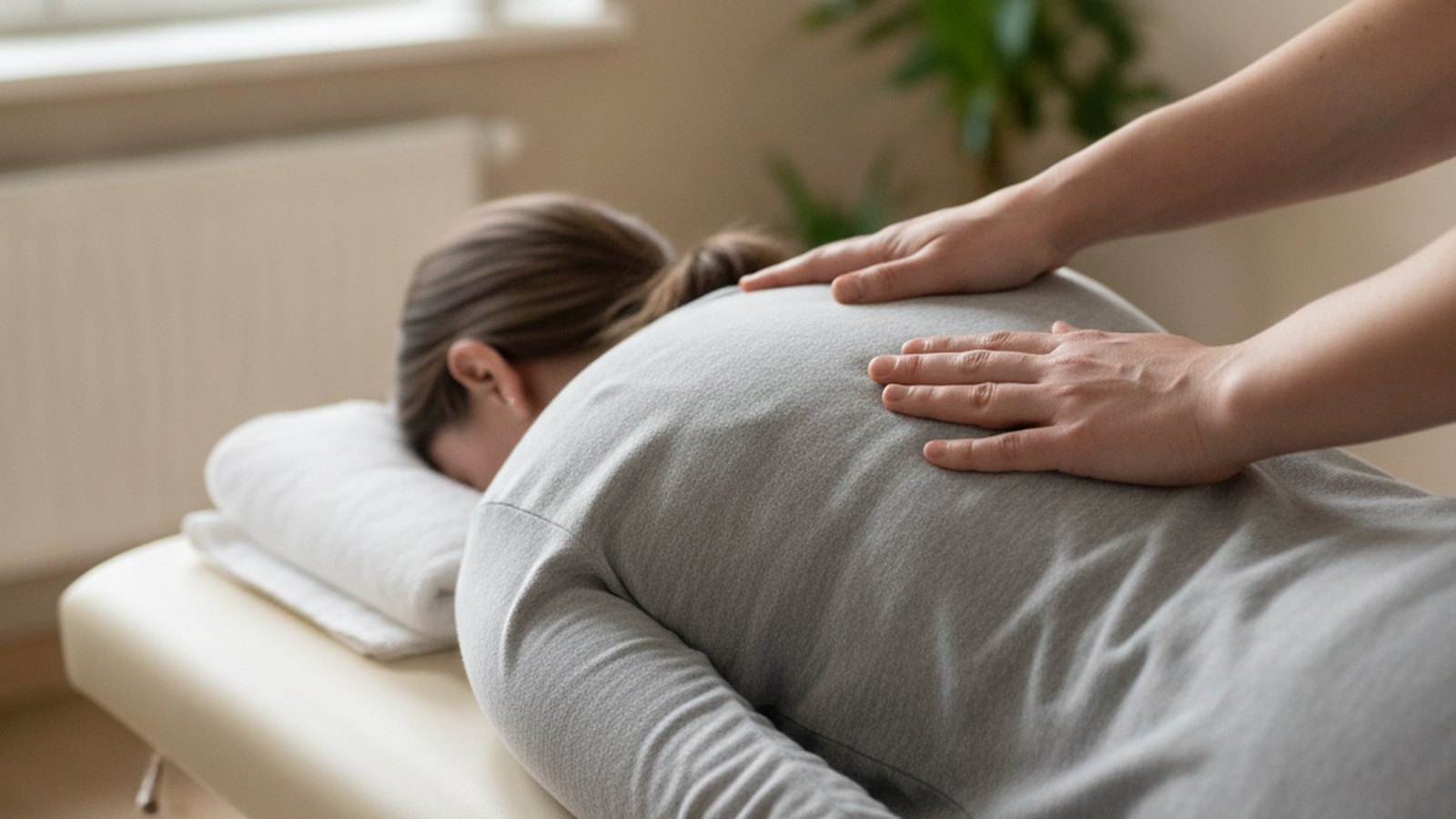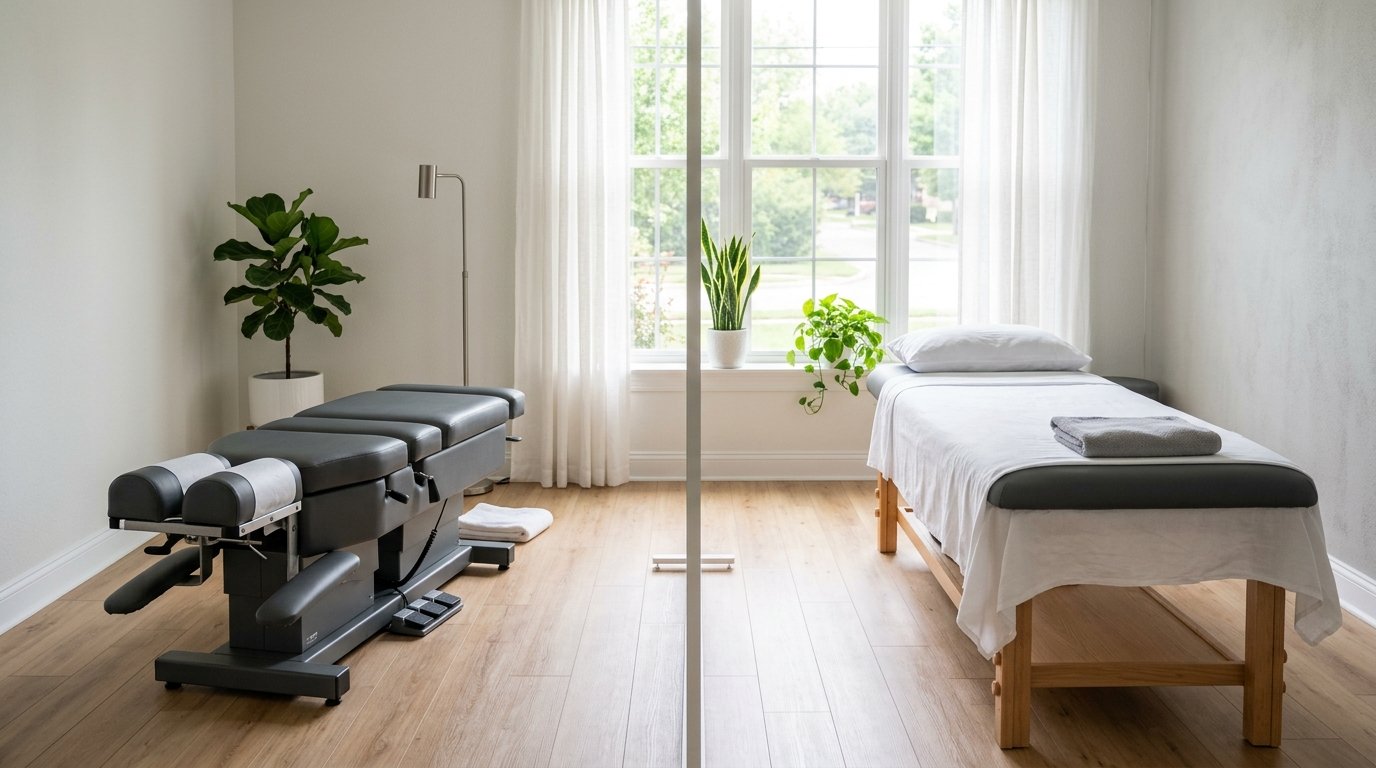
Chiropractors and osteopaths both use hands-on treatment for back, neck and joint pain. In Ontario, chiropractors are a regulated health profession focused on joint and spinal function, often using adjustments. Osteopathic manual practitioners are not regulated and use gentle, whole-body techniques such as soft tissue work and mobilization. Choose a chiropractor for targeted joint and spine care, and an osteopath for gentler whole-body work or a problem that has not responded to a local approach.
Key Takeaways
- Both professions treat back, neck and joint pain with hands-on care, so there is real overlap.
- Chiropractors are regulated in Ontario by the College of Chiropractors of Ontario. Manual osteopathy is not a regulated health profession in Ontario.
- Chiropractic often includes joint adjustments; osteopathy uses gentler techniques and looks at how the whole body moves together.
- Extended health plans treat them differently: chiropractic is a standard benefit, while osteopathy coverage depends on plan wording and accepted associations.
- Chiropractic fees can count toward the medical expense tax credit in Ontario; osteopathy fees generally cannot.
In This Article
Osteopaths and chiropractors both use hands-on treatment for back, neck and joint pain, but they train differently, are regulated differently in Ontario, and tend to use different techniques. In short, a chiropractor is usually the more direct choice for a specific joint or spine problem, and an osteopath suits gentler whole-body work.
The details below cover what each one does, how insurance treats them, and how to pick the right first appointment.
What a Chiropractor Does
Chiropractors assess and treat problems with the joints, muscles and nerves, with a particular focus on the spine. Treatment often includes adjustments (quick, controlled movements to a joint), along with soft tissue work, mobilization and exercises to keep the improvement.
In Ontario, chiropractic is a regulated health profession. The College of Chiropractors of Ontario says it regulates "chiropractic in Ontario in the public interest", which means set entry standards, a public register and a complaints process. Chiropractors usually complete a four-year chiropractic program after university studies and use the title Doctor of Chiropractic.
Our guide to what a chiropractor does walks through a first visit in more detail.
What an Osteopath Does
Osteopathic manual practitioners look at how the body's muscles, joints and other structures move together, and use gentle hands-on techniques such as soft tissue work, joint mobilization and stretching. A session often treats areas away from the sore spot if they seem to be part of the problem.
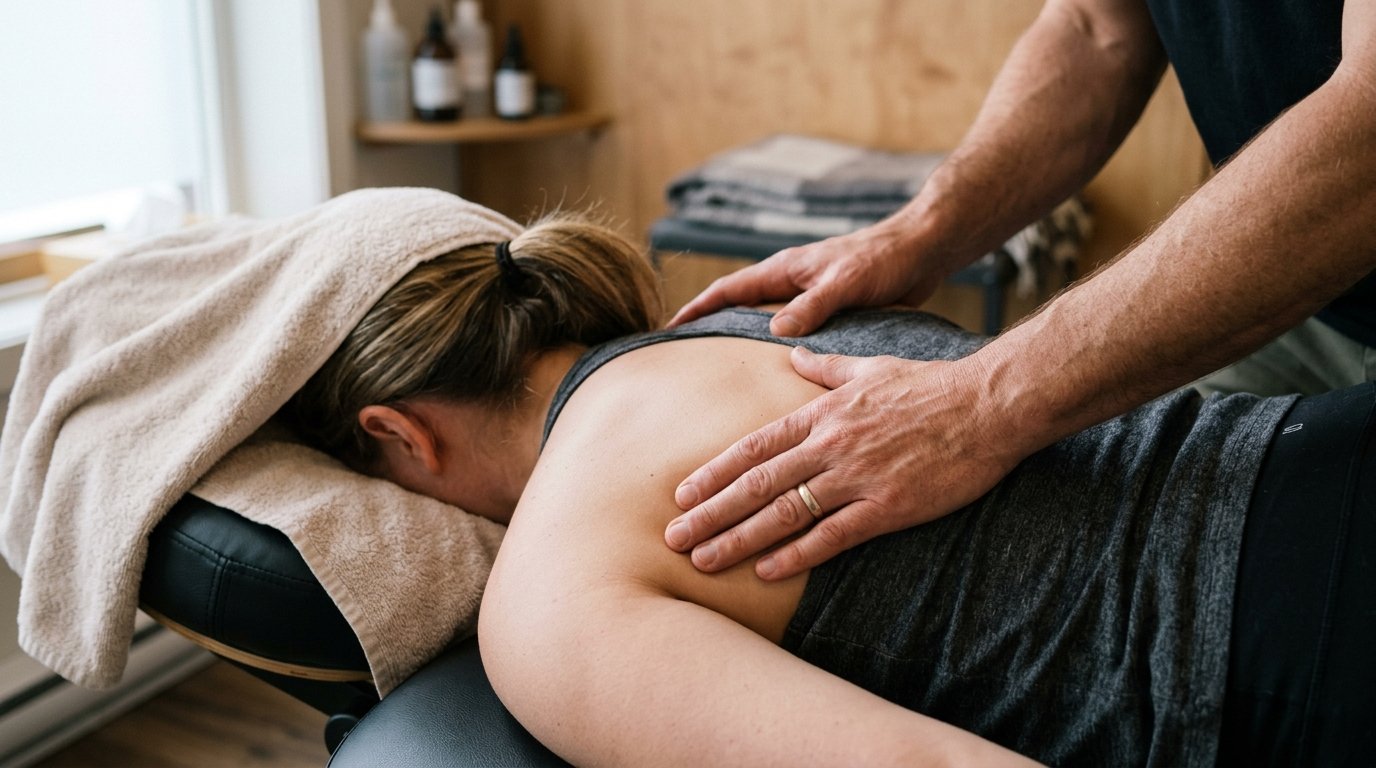
The regulation picture is different. The Ontario Association of Osteopathic Manual Practitioners states that manual osteopathy "is not currently recognized as a regulated health profession" in Ontario. Practitioners train at private colleges and belong to professional associations, which set their own standards. That is not a reason to avoid osteopathy, but it does mean you should ask where your practitioner trained and which association they belong to.
Do not confuse an osteopathic manual practitioner with an osteopathic physician. In Ontario, osteopathic physicians are medical doctors regulated by the College of Physicians and Surgeons of Ontario. Our guide to what an osteopath does has more on the manual practice.
Osteopath vs Chiropractor at a Glance
| Chiropractor | Osteopathic manual practitioner | |
|---|---|---|
| Regulated in Ontario | Yes, College of Chiropractors of Ontario | No, association membership |
| Typical focus | Joints, spine and nerves | Whole-body movement and tension |
| Common techniques | Adjustments, soft tissue, exercise | Gentle mobilization, soft tissue, stretching |
| Covered by OHIP | No, for most adults | No |
| Extended health plans | Standard paramedical benefit | Often covered, may depend on association |
| Medical expense tax credit (Ontario) | Yes | Generally no |
Which One Should You Book?
A chiropractor may suit you if:
- your pain is in a specific joint or area of the spine, such as low back pain, neck stiffness or a headache linked to your neck
- you want a clear assessment and a short, structured treatment plan
- you are comfortable with adjustments, or want them as an option
An osteopath may suit you if:
- you prefer a gentler approach without quick adjustments
- your pain is long-standing or seems to move around, and has not settled with a more local approach
- you are pregnant or postpartum and want gentle hands-on care
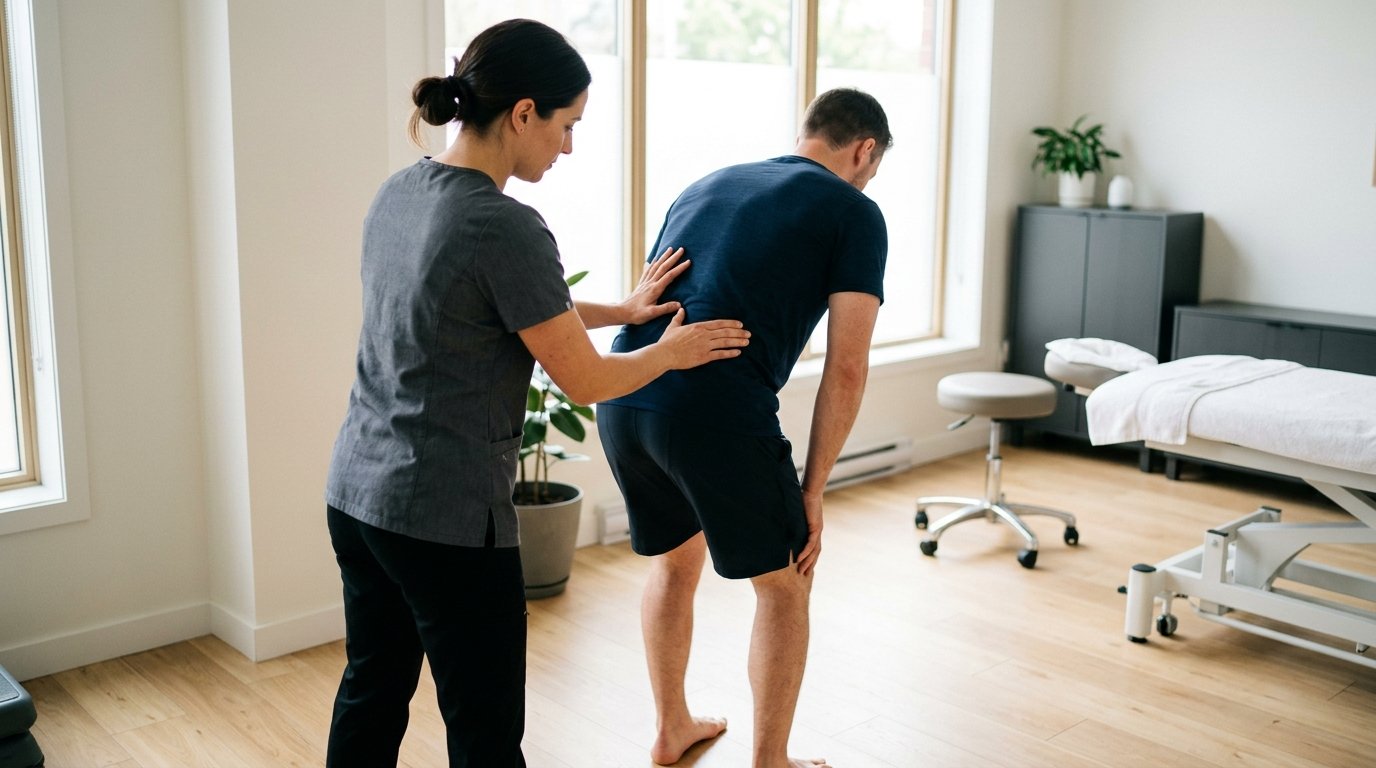
If you are still unsure, book whichever one you can see sooner. A good practitioner will tell you at the first visit if another type of care would suit you better. If your problem is mainly about strength and rehab after an injury, our post on choosing between a chiropractor and a physiotherapist covers that comparison.
How Insurance Treats Each One
Neither is covered by OHIP for most adults, so most people use extended health benefits.
Chiropractic is one of the most common paramedical benefits. Chiropractors are also listed for Ontario in the Canada Revenue Agency's table of authorized medical practitioners, so fees your plan does not cover can usually go toward the medical expense tax credit.
Osteopathy is covered by many plans, but often only for practitioners who belong to an approved association, and osteopaths are not on the CRA list for Ontario. Our guides to chiropractic coverage and OHIP and osteopathy insurance in Ontario explain what to ask your plan.
Osteopathy and Chiropractic at Anchor in Keswick
You do not have to pick in the dark. At Anchor, osteopathy is provided by Riandre Flores, an Osteopathic Manual Practitioner with a Master in Practice of Osteopathic Manipulative Sciences and a background in physiotherapy. Our chiropractors treat back and neck pain, headaches, pregnancy pain and sports injuries for patients of every age. Both work under one roof, so you can be pointed to the right care without starting over.
We offer direct billing to most major insurers where possible. Contact us or call (905) 535-4449 to book in Keswick, a short drive from Sutton, Jackson's Point and Pefferlaw.
References
- College of Chiropractors of Ontario
- Osteopathy Regulation in Ontario, Ontario Association of Osteopathic Manual Practitioners
- Authorized medical practitioners for the purposes of the medical expense tax credit, Canada Revenue Agency
Ready When You Are
Book an assessment at our Keswick clinic
No referral needed. Most extended health benefit plans provide coverage, and we direct bill where possible.