

In This Article
If you have noticed a persistent bulge or "doming" down the middle of your abdomen after pregnancy, you are not alone. However, just because this core separation is common does not mean you have to accept it as your new normal. You can rebuild your core strength and eliminate the discomfort associated with diastasis recti.
The abdominal muscles endure significant stretching during pregnancy. For many women, these muscles do not automatically return to their pre-pregnancy state, leaving a gap that compromises core stability and pelvic health.
What Is Diastasis Recti?
Diastasis recti is the partial or complete separation of the rectus abdominis, the muscles that meet at the midline of your stomach. During pregnancy, the connective tissue (linea alba) between these muscle halves stretches and thins to accommodate your growing baby.
After giving birth, this tissue can remain overstretched. Without proper tension in the midline, the abdominal wall loses its ability to transfer load effectively. This lack of core stability often leads to lower back pain, pelvic floor dysfunction, and a noticeable "pooch" that does not respond to traditional diet or exercise.
How to Check for Diastasis Recti at Home
You can perform a simple self-assessment to check for abdominal separation:
- Lie flat on your back with your knees bent and your feet flat on the floor.
- Place your fingers horizontally just above your belly button.
- Gently lift your head and shoulders off the floor, as if performing a small crunch.
- Feel for a gap between the left and right sides of your abdominal muscles. Note how many fingers fit into the space and assess the tension (does it feel firm, or soft and squishy?).
A gap of two or more finger-widths, or a midline that feels soft and lacks tension, strongly indicates diastasis recti. A professional clinical assessment is the best way to confirm the severity and develop a targeted treatment plan.
Signs and Symptoms You Should Know
Beyond the physical gap, diastasis recti presents several functional symptoms that impact your daily life. You should book an assessment if you experience:
- Visible Doming: A ridge or bulge running down the center of your abdomen when you sit up or lift something heavy.
- Persistent Core Weakness: Feeling unsupported through your midsection during basic movements.
- Lower Back Pain: Aching or sharp pain resulting from your back overcompensating for a weak core.
- Pelvic Floor Issues: Leaking, heaviness, or pain. The core and pelvic floor work together; weakness in one often affects the other. Read our complete guide to pelvic floor physiotherapy for more details.
Why Traditional Core Workouts Make It Worse
Many women attempt to fix their postpartum core by returning to crunches, sit-ups, or heavy planks. Unfortunately, these traditional exercises increase intra-abdominal pressure. If the connective tissue is already weak, this pressure forces the muscles further apart, worsening the separation and exacerbating the "doming" effect.
Rehabilitating diastasis recti requires a specific, progressive approach that focuses on deep core activation, breathing mechanics, and rebuilding tension in the linea alba.
How Anchor's Postnatal Rehab Helps
At Anchor Health & Fitness in Keswick, we do not believe in a one-size-fits-all approach to postpartum recovery. Rebuilding your core safely requires clinical expertise and structured programming.
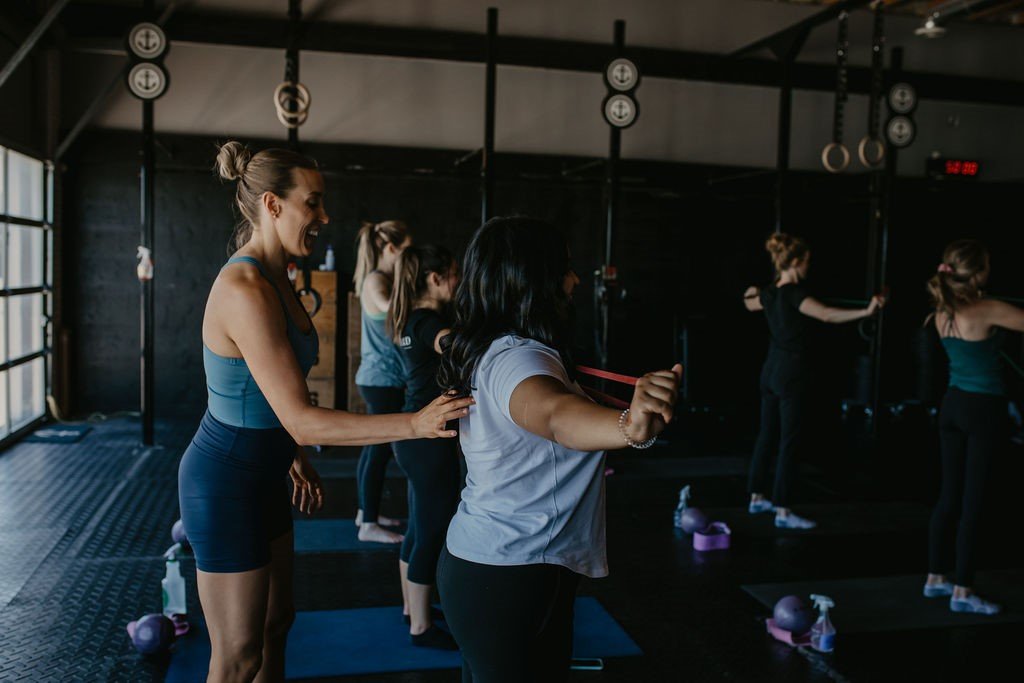
Our GROWCO postnatal rehab program is specifically designed to address diastasis recti and pelvic floor dysfunction. We combine functional training, mobility work, Pilates, and pelvic health rehab to help you reconnect to your core. We assess your specific degree of separation and build a progressive plan that restores function from the inside out. Read our complete GROWCO program guide to see what each level involves, who the program is for and how the required assessment works.
"Crunches and traditional ab workouts can actually make diastasis recti worse. A guided, progressive program is the safe, effective path back to a strong core."
Because your core is connected to your entire musculoskeletal system, our approach is collaborative. Your rehab plan may integrate chiropractic care and general physiotherapy to ensure your pelvis and spine are properly aligned as you rebuild strength. GROWCO requires a chiropractic assessment before you start, so if that is unfamiliar territory, read what a chiropractor actually does first. If you had a C-section, lymphatic drainage massage can also accelerate recovery by reducing post-surgical swelling and supporting scar tissue healing.
Take the First Step
You deserve to feel strong, stable, and confident in your body after giving birth. If you suspect you have diastasis recti, do not wait for it to resolve on its own, and do not risk making it worse with the wrong exercises.
Our team is ready to help you rebuild your core safely and effectively. Book your postnatal chiropractic assessment today and start your recovery with the Anchor team in Keswick.
Ready When You Are
Book an assessment at our Keswick clinic
No referral needed. Most extended health benefit plans provide coverage, and we direct bill where possible.