
How Long Does Physiotherap Take? Honest Timelines for Recovery
When you are in pain or recovering from an injury, patience is often the hardest thing to practice. Whether you have tweaked your lower back lifting groceries, sustained a sports injury on the field, or are recovering from a recent surgery, the most pressing question on your mind is likely: "When will I feel normal again?" If you are looking into physiotherapy Keswick how long it takes is easily the top question we hear at Anchor Health and Fitness Centre.
The honest truth is that the human body is not a machine, and healing does not follow a strict, universal calendar. There is no magic number of sessions that guarantees a 100% cure for every person. However, that does not mean you are left entirely in the dark. By understanding the biological phases of healing and looking at clinical averages for specific injuries, we can provide realistic, honest timelines for your recovery.
This comprehensive guide will break down what to expect during your rehabilitation journey. We will explore the typical timelines for common conditions, delve into the factors that speed up or slow down your progress, and answer the burning question: how many physio sessions do I need to finally see results?
The Biological Reality: Understanding the Phases of Healing
Before we dive into specific timelines for different body parts, it is crucial to understand why physiotherapy takes the time that it does. Physiotherapy is not just about managing pain; it is about facilitating and guiding your body's natural tissue repair processes.
When you sustain an injury, whether it is a muscle strain, a ligament sprain, or post-surgical trauma, your body goes through three distinct, overlapping phases of healing. Your physiotherapy timeline is directly tied to these biological phases.
1. The Inflammatory Phase (Days 1 to 6)
Immediately following an injury, your body sends a rush of blood, white blood cells, and inflammatory chemicals to the site. This causes the swelling, redness, heat, and pain you experience. While inflammation gets a bad reputation, it is actually a vital first step to clear away damaged cells and prepare the area for repair.
Physiotherapy Goal: Protect the area, manage extreme pain, and reduce excessive swelling through gentle modalities, taping, and education.
2. The Proliferation (Repair) Phase (Days 4 to 24)
Once the initial cleanup is underway, your body begins to lay down new tissue-primarily a protein called collagen-to repair the damage. Think of this like throwing down fresh asphalt on a pothole. It covers the hole, but the new tissue is disorganized, weak, and easily re-injured.
Physiotherapy Goal: Begin gentle movement to align the new collagen fibers correctly. This is where range-of-motion exercises and light, pain-free loading are introduced to ensure the scar tissue heals strong and flexible rather than stiff and brittle.
3. The Remodeling (Maturation) Phase (Day 21 to 2+ Years)
This is the longest phase. The disorganized "asphalt" is slowly replaced by stronger, highly organized tissue that mimics the original structure. The strength of this new tissue depends entirely on the physical stress placed upon it.
Physiotherapy Goal: Progressive overloading. This is the heavy lifting phase of your rehab, where we rebuild your strength, endurance, and sport-specific mechanics to ensure the injury does not happen again.
Because remodeling can take months or even years, your physiotherapy timeline is often about getting you safely through the first two phases and giving you the tools to manage the long-term remodeling phase independently.
Honest Timelines for Common Conditions
While everyone is unique, clinical data and our extensive experience treating patients allow us to provide average recovery windows. Here is a breakdown of what to expect for some of the most common issues we treat.
Back Pain Physiotherapy Timeline

Low back pain is incredibly common and can range from a minor annoyance to a debilitating condition. The back pain physiotherapy timeline depends heavily on the root cause of the discomfort.
Acute Muscular Strains (The "Tweaked" Back)
Timeline: 2 to 6 weeks.
What to expect: If you simply pulled a muscle lifting something heavy, the initial acute pain usually subsides within a week or two. Physiotherapy will focus on rapidly restoring your mobility, reducing muscle spasms, and then teaching you core stabilization exercises to prevent a recurrence. Most patients see significant improvement within 4 to 6 sessions.
Disc Bulges and Herniations (Sciatica)
Timeline: 8 to 12+ weeks.
What to expect: When a spinal disc presses on a nerve (often causing pain to shoot down the leg), the healing process is slower. Nerves heal very slowly. The first 3 to 4 weeks focus on centralizing the pain (moving it out of the leg and back to the spine) using specific directional movements. The subsequent weeks involve intense core strengthening and biomechanical training. You may need 8 to 15 sessions over several months to fully stabilize a disc injury.
Chronic Non-Specific Low Back Pain
Timeline: 3 to 6 months.
What to expect: If you have had back pain for years, it will not disappear in a week. Chronic pain often involves changes in how your nervous system processes pain signals, alongside muscular imbalances. Physiotherapy for chronic back pain is a marathon, focusing on gradual load exposure, lifestyle modifications, and building long-term resilience.
Knee Injury Physio Georgina: What to Expect

The knee is a complex hinge joint that takes a lot of abuse during daily life and sports. If you are seeking knee injury physio Georgina residents should know that timelines vary wildly based on the specific structure damaged.
Minor Meniscus Tears and Patellofemoral Pain (Runner's Knee)
Timeline: 4 to 8 weeks.
What to expect: Irritation around the kneecap or minor cartilage fraying usually responds well to a combination of activity modification, reducing inflammation, and strengthening the quadriceps, hamstrings, and glutes. Expect to attend physiotherapy 1 to 2 times a week for about a month to six weeks to see lasting changes.
Ligament Sprains (MCL, LCL)
Timeline: 6 to 12 weeks.
What to expect: Ligaments connect bone to bone and have a notoriously poor blood supply, making them slow to heal. A Grade 1 (mild) sprain might feel better in 3 weeks, but a Grade 2 (moderate tear) will take 8 to 12 weeks of careful bracing, progressive range of motion, and dynamic stability training before you can safely return to pivoting sports.
Major Surgeries (ACL Reconstruction, Knee Replacement)
Timeline: 6 to 12+ months.
What to expect: These are major structural overhauls. An ACL reconstruction requires 9 to 12 months of rigorous, phased rehabilitation before a safe return to sports like soccer or hockey. A total knee replacement typically requires 3 to 4 months of intensive physiotherapy just to regain normal walking mechanics and stair climbing ability, with continued improvements over a full year.
Rotator Cuff and Shoulder Timelines
The shoulder is the most mobile joint in the human body, which unfortunately makes it highly susceptible to injury and instability.
Rotator Cuff Tendinopathy / Impingement
Timeline: 6 to 12 weeks.
What to expect: Tendons (which connect muscle to bone) heal much slower than muscles due to lower blood flow. If your rotator cuff tendons are inflamed or degenerated, it takes consistent, progressive loading to stimulate tendon repair. You may start feeling better after 3 weeks, but stopping physiotherapy too early is the main reason these injuries become chronic. You need 2 to 3 months to build the tendon capacity back up.
Frozen Shoulder (Adhesive Capsulitis)
Timeline: 12 to 24+ months.
What to expect: This is one of the most frustrating conditions for patients. The shoulder capsule thickens and tightens, causing severe pain and stiffness. The condition naturally progresses through a "freezing," "frozen," and "thawing" stage. Physiotherapy cannot dramatically speed up this timeline, but it is essential for managing pain, maintaining whatever range of motion is possible, and preventing severe muscle atrophy during the two-year process.
Post-Surgical Rotator Cuff Repair
Timeline: 4 to 6 months.
What to expect: After a surgeon anchors a torn tendon back to the bone, you must protect it for 4 to 6 weeks in a sling (doing only passive motion). Active strengthening does not begin until week 8 or 10. Returning to heavy lifting or overhead sports is typically a 6-month journey.
Factors That Influence Your Recovery Timeline
If two people suffer the exact same ankle sprain, why might one person recover in four weeks while the other takes ten? The answer lies in the variables that influence human healing. Your physiotherapist will assess these factors during your initial evaluation.
1. Age and General Health
As we age, cellular metabolism slows down. A 20-year-old produces collagen and regenerates tissue faster than a 60-year-old. Furthermore, underlying health conditions heavily impact healing. Conditions like diabetes impede blood flow, which starves repairing tissues of oxygen and nutrients. Autoimmune disorders or systemic inflammation can also prolong the inflammatory phase of healing.
2. The Severity of the Tissue Damage
A micro-tear in a muscle fiber (Grade 1) heals exponentially faster than a complete rupture (Grade 3). The physical distance the body has to bridge with new scar tissue dictates the biological timeline.
3. How Quickly You Sought Treatment
Ignoring pain and pushing through an injury is a guaranteed way to double your recovery time. If you wait months to seek treatment for a sore shoulder, your body will have developed compensation patterns-using other muscles improperly to avoid pain. Your physiotherapist now has to fix the original injured tissue and un-train months of bad movement habits.
4. Your Lifestyle and Nutrition
Healing requires massive amounts of energy and raw materials. If you are sleep-deprived, highly stressed, dehydrated, or consuming a diet lacking in sufficient protein and micronutrients, your body will struggle to build strong new tissue. Smoking is particularly detrimental, as it constricts blood vessels and dramatically slows bone and soft tissue healing.
5. Compliance with Your Home Exercise Program
This is the single most important factor within your control. Physiotherapy is not something that is "done to you" for one hour a week in the clinic. It is an active partnership. Your physiotherapist will prescribe a tailored home exercise program. If you only do your exercises when you are in the clinic, your recovery will take significantly longer. Consistency at home is what forces the tissue to adapt and grow stronger.
So, How Many Physio Sessions Do I Need?
When patients ask, "how many physio sessions do I need?", the honest answer is that it is a collaborative decision made over time.
At Anchor Health and Fitness Centre, we do not believe in locking you into generic, 20-session packages right out of the gate. Your treatment plan should be as dynamic as your healing process.
Typically, treatment is front-loaded. You might see your physiotherapist once or twice a week during the acute phase (the first 2 to 4 weeks) to manage pain, ensure you are moving correctly, and progress your exercises safely. As your pain decreases and your confidence increases, the frequency drops. You might transition to once every two weeks, and eventually to once a month for check-ins as you focus entirely on your independent strengthening program.
A minor injury might require 3 to 5 total sessions. A major post-surgical rehab might require 20 to 30 sessions spread over a year. Our goal is always to empower you to manage your own body, giving you the tools to graduate from physiotherapy as quickly and safely as possible.
Why Consistency is Key to Faster Results
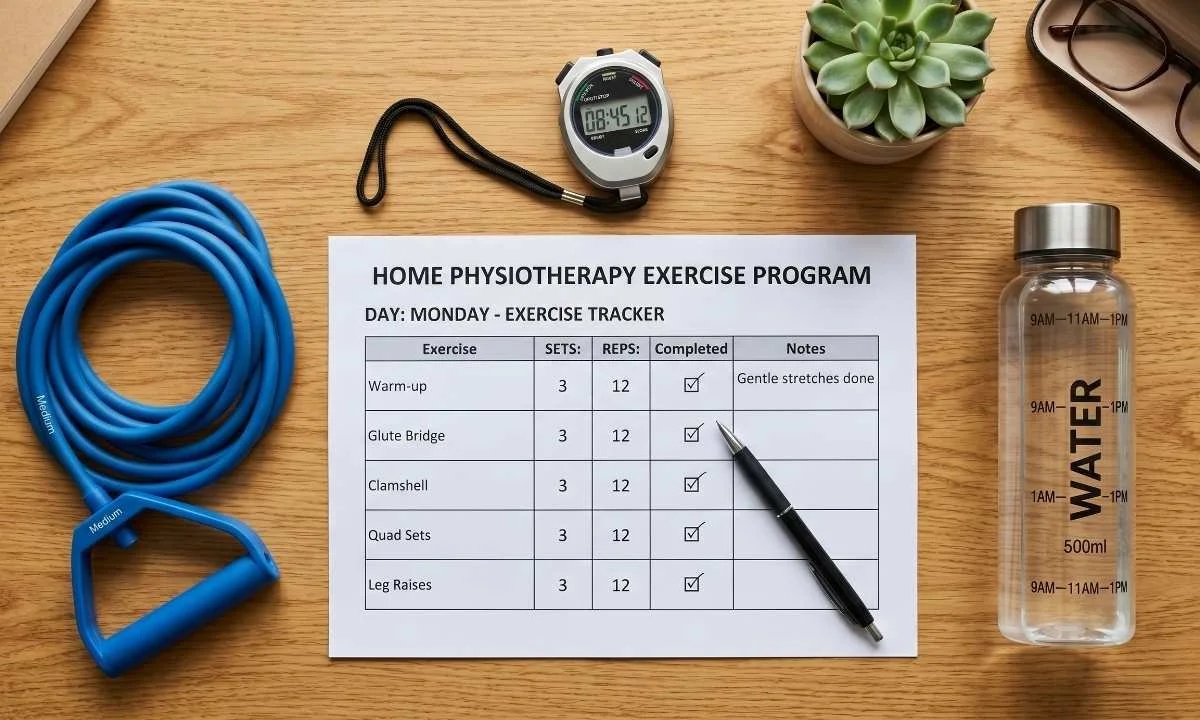
The temptation to quit physiotherapy early is high. Usually, around week three or four of treating a moderate injury, your pain will disappear during daily activities. You feel "cured."
However, the absence of pain does not equal the presence of strength. At this stage, your tissue is in the remodeling phase. It is pain-free, but it is still structurally weak. If you stop doing your prescribed exercises and jump right back into heavy lifting or intense sports, the tissue will fail, and you will be right back at square one.
Completing your full physiotherapy timeline ensures that the repaired tissue can handle the demands of your lifestyle, dramatically reducing the risk of re-injury. You may have seen the image image_2d8c12.png noting that answering this timeline question is a top priority for patients-and we want to give you the transparent truth.
Frequently Asked Questions
Can physiotherapy make my pain worse before it gets better?
Sometimes, yes. As we introduce new movements, stretch tight tissues, or ask weakened muscles to work, you may experience delayed onset muscle soreness (DOMS) or a temporary, mild flare-up of your symptoms. This is a normal part of the remodeling process. However, sharp, intense, or worsening nerve pain is not normal, and you should communicate this to your physiotherapist immediately.
Do I need an X-ray or MRI before starting physiotherapy?
In most cases, no. Physiotherapists are highly trained primary healthcare practitioners capable of diagnosing musculoskeletal conditions through comprehensive clinical movement assessments. In fact, early imaging often shows age-related "wear and tear" that has nothing to do with your current pain, leading to unnecessary anxiety. If your physiotherapist suspects a fracture, severe tear, or non-musculoskeletal issue, they will refer you back to your doctor for imaging.
How long are physiotherapy sessions?
At Anchor Health and Fitness Centre, initial assessments are typically 45 to 60 minutes long to allow for a thorough history, physical exam, and initial treatment. Follow-up treatment sessions are generally 30 to 45 minutes, depending on the complexity of your condition and the treatments being provided.
What if I don't have time to do my home exercises?
We understand that life is busy. If you cannot commit to 30 minutes of exercises a day, tell your physiotherapist. It is much better to have an honest conversation so we can modify your program. We can often distill your rehab down to 2 or 3 critical exercises that take 10 minutes, or find ways to incorporate them into your existing daily routine or gym workouts.
Your Path to Lasting Recovery Starts Here
Dealing with an injury is frustrating, and the uncertainty of recovery only adds to the stress. While there is no crystal ball to predict exactly what day you will be 100% healed, understanding the biological timelines and committing to a structured rehabilitation plan is the fastest, safest way forward.
Do not let lingering pain dictate your lifestyle or rely on guesswork for your recovery. Whether you need a detailed back pain physiotherapy timeline or are looking for dedicated knee injury physio Georgina residents can trust, the team at Anchor Health and Fitness Centre is here to guide you every step of the way.
Ready to stop guessing and start healing? Contact Anchor Health and Fitness Centre today to book your comprehensive physiotherapy assessment and get a personalized timeline for your recovery.